
Dendrophthora
Dendrophthora
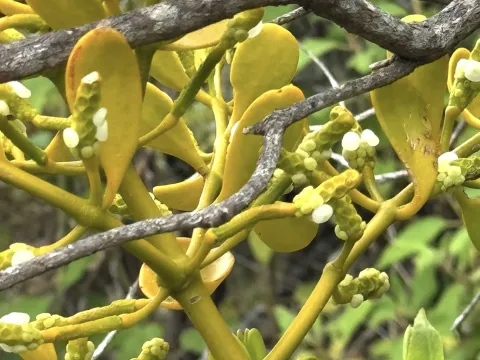
Dendrophthora is a genus of hemiparasitic plants belonging to the family Santalaceae. Unlike traditional agricultural crops, these plants lead the life of epiphytic parasites, attaching themselves to the branches of woody species using specialized organs called haustoria.
What the section contains

Dendrophthora
Geographically, representatives of this genus are widely distributed in the tropical and subtropical regions of the New World. The main range covers territories in Central and South America, as well as the Caribbean islands, where climatic conditions facilitate the development of specific mycorrhizal and parasitic relationships.
Botanically, Dendrophthora is closely related to mistletoe and is characterized by the absence of a distinct root system in the traditional sense. Instead of roots, it develops a system of absorbing organs that penetrate under the bark of the host tree, extracting water and minerals from the xylem.
For normal growth, the plant requires high air humidity and a stable temperature regime characteristic of tropical rainforests. Dendrophthora shows a high degree of dependence on the health of its host, yet it is capable of independent photosynthesis, which classifies it as a hemiparasite.
In natural conditions, the reproduction of Dendrophthora occurs primarily through ornithochory. Birds that feed on the juicy fruits of the plant disperse seeds onto other branches, ensuring the colonization of the forest area and the expansion of the infestation zone on woody plants.
The main biological threats to the plant itself include specific fungal infections that attack the tissues of the shoots when the humidity balance in the ecosystem is disturbed. Furthermore, the excessive spread of a Dendrophthora population often leads to the death of the host tree, which indirectly threatens the parasite colony itself.