
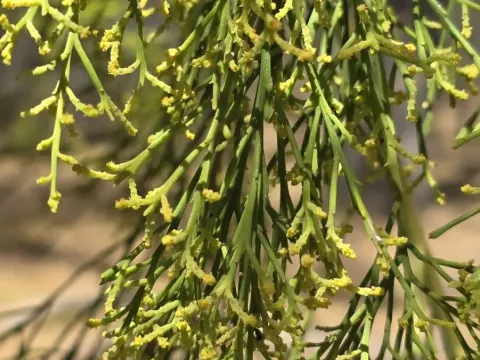
Exocarpos
Exocarpos
Exocarpos is a genus of evergreen shrubs and trees belonging to the Santalaceae family, widely distributed across Australia, the Pacific Islands, and Southeast Asia. These plants are scientifically recognized for their hemiparasitic lifestyle, utilizing haustoria to attach to the root systems of host plants for mineral and water supply.
What the section contains


Exocarpos
Botanically, they exhibit a unique morphology where the fruits are perched on fleshy, swollen pedicels, often mistaken for berries. This structural adaptation, combined with their reduced foliage, allows them to survive in harsh, sun-drenched environments with minimal soil resources.
Climate requirements for the genus generally include bright, open conditions with a preference for warm temperatures. They are highly drought-tolerant, having evolved in arid to semi-arid regions, and are capable of thriving in poor, rocky, or sandy soils where other species might fail to establish.
Soil management for Exocarpos requires excellent drainage, as the species is highly susceptible to root rot in waterlogged conditions. Successful cultivation depends on establishing a healthy symbiosis with compatible host plants, which act as a vital nutrient donor in the early stages of growth.
The economic and historical utility of Exocarpos primarily centers on the edible, succulent pedicels consumed by indigenous populations. Additionally, the timber of certain species is valued for its hardness and fine grain, making it an occasional choice for specialized woodworking and carving projects.
The primary threats to Exocarpos involve fungal pathogens, particularly root-rotting fungi such as Phytophthora species, which thrive in moist or poorly drained environments. These pathogens compromise the haustorial connections, effectively severing the plant's nutrient source and leading to rapid decline.
Insect pests, including scale insects and certain foliage-feeding larvae, can pose a risk in greenhouse or nursery settings. Maintaining plant vigor through careful monitoring and ensuring that host plants remain healthy is essential for minimizing the impact of these infestations on the overall plant population.