
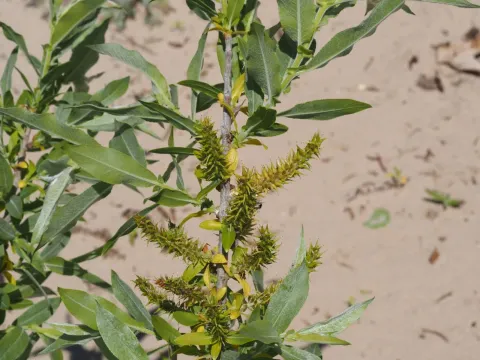
Sand willow
Salix syrticola
The Sand willow (Salix syrticola) is a resilient shrub species belonging to the Willow family (Salicaceae), naturally adapted to survive in harsh, sandy environments.
What the section contains
Sand willow
Its primary ecological function is the stabilization of shifting sands, making it an essential plant for land reclamation projects in arid or coastal regions.
This species is characterized by a high demand for sunlight, meaning that planting sites should be open and free from competition with taller forest vegetation.
It thrives in light, well-aerated soils where moisture is available at deeper levels, but it is sensitive to waterlogging, which can easily cause root decay.
Proper agro-technical management involves maintaining clear spaces around young plants to ensure they receive enough nutrients and light during the establishment phase.
The main objective of cultivating Sand willow is not for harvest in the traditional sense, but for its significant value in erosion control and soil protection.
Propagation is typically achieved through woody cuttings harvested during the winter dormancy period, which show high success rates when planted in sandy substrates.
In terms of biomass management, periodic pruning is conducted to rejuvenate the plants and maintain their structural integrity against wind and moving sand.
The flexibility of the stems allows for limited use in rustic handicrafts, although the species is primarily appreciated for its hardiness rather than aesthetic flexibility.
Strategic harvesting of cuttings also serves as a method to propagate the species into new areas that require stabilization or reforestation efforts.
Sand willow is susceptible to various fungal pathogens, such as leaf spot and rust, which often emerge if environmental conditions become excessively humid.
Insect pests, including willow leaf beetles and aphids, may affect the plant's health by feeding on the leaves, leading to reduced overall growth vigor.
Good plantation hygiene, including the removal of dead or heavily infested branches, is critical to preventing the spread of disease within the colony.
Monitoring for signs of stress is recommended throughout the growing season, particularly after extreme temperature fluctuations or prolonged drought events.
Integrated pest management strategies focusing on early detection and targeted treatments help protect the shrub's health without disrupting the local ecosystem.