
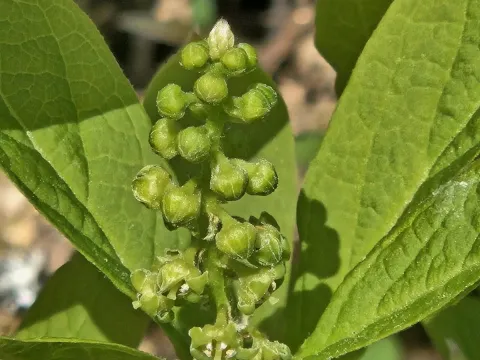
Pyrularia
Pyrularia
Propagating Pyrularia is a challenging task due to its hemiparasitic lifestyle. The seeds require stratification in cool, moist conditions to successfully break dormancy before germination can occur.
What the section contains

Pyrularia
In their natural habitat, seeds germinate in the autumn after falling onto moist forest soil. In an artificial setting, it is critical to facilitate immediate root contact with a host plant, which is the primary survival factor for seedlings during their initial growth stages.
The optimal time for transplanting seedlings or direct sowing is early spring once the soil has warmed. It is essential to ensure that the root system never dries out, as it remains highly sensitive to moisture deficits during the first months of development.
Experts recommend using a container-grown approach to produce robust nursery stock before field planting. This method allows for better monitoring of the parasitic relationship and ensures a healthy initial growth phase for the plant.
To establish productive stands, it is necessary to plant compatible hosts, such as various oak species or other deciduous trees, beforehand. Pyrularia develops to its full potential only when it has physical root contact with a donor plant to provide necessary nutrients.
Pyrularia belongs to the Santalaceae family and is a deciduous shrub or small tree native to temperate mountain forests. It has strict requirements for the presence of suitable host species nearby, from which it obtains essential water and minerals.
The crop prefers well-drained, fertile forest soils with a neutral or slightly acidic pH. Waterlogging in the root zone must be avoided, as it leads to root rot and the subsequent demise of the plant's delicate root system.
Climate requirements include moderately warm summers and distinct, but not severely cold, winters. The plant performs poorly under drought conditions and requires consistent moisture typical of foothills or sheltered forest valleys.
Ideal light levels range from partial shade to diffused light under a sparse forest canopy. Direct, intense sunlight during peak summer can cause leaf scorch and decrease the overall vigor of the plant.
Maintenance involves managing the density of host trees to ensure the Pyrularia receives adequate shade and continues to have access to the resources provided by its hosts.
The economic value of Pyrularia is centered on its seeds, which are rich in high-quality oils. While not a mass-market agricultural crop, its fruits are highly valued for their unique chemical profile and historical uses.
Oil extracted from the seeds has traditionally been used in industrial applications and folk medicine. Yield per bush varies significantly depending on the maturity of the plant and the success of its symbiotic relationship with the host.
The productivity of the plant is directly proportional to the health of the surrounding ecosystem. In forest gardening systems, Pyrularia can provide stable fruit yields provided the natural development cycle is respected and the plant is free from excessive stress.
Harvesting is labor-intensive because fruits do not ripen simultaneously and can fall off easily. Hand-harvesting as fruits reach their characteristic color, signaling maturity, is considered the best practice.
The potential of this crop as a source of specialized vegetable oils remains limited by its ecological constraints, classifying Pyrularia as a niche crop in agroforestry.
The primary threats to Pyrularia are pathogens that affect the host forest trees. Because the plant is intrinsically linked to its host, diseases affecting the host directly endanger the Pyrularia population.
Common pests include insects that damage foliage and tender shoots, especially during periods of mass outbreaks. Managing pest populations is difficult due to environmental restrictions on pesticide use in forest settings.
Root rot caused by soil-borne pathogens is a serious risk when soil moisture is not managed correctly. Infection can spread rapidly through the root connections, making the containment of disease outbreaks highly challenging.
Animals such as deer and rodents can damage the bark and young shoots, creating entry points for secondary infections. Protecting young plantings with physical barriers is a mandatory component of standard agrotechnology.
- Leaf spot diseases.
- Root rot caused by Phytophthora species.
- Bark damage by small mammals.
- Infestation by leaf-eating insects.
Harvesting usually begins in autumn when fruits change color and detach easily from the stem. Given the staggered ripening period, multiple passes through the plantation may be necessary to ensure all fruit is collected.
Fruits are hand-picked with care to avoid breaking the brittle stems of the shrub. Once collected, the produce should be transported immediately to a dry, well-ventilated area to prevent decay.
Initial processing involves removing the outer fruit coat and drying the seeds. Careful control of drying temperatures is essential to maintain the quality and chemical integrity of the oils contained within the seeds.
Storage requires airtight containers to protect the seeds from humidity and pests. Under proper conditions, the seeds maintain their value over an extended period, allowing for the accumulation of marketable quantities.
Waste management following the harvest must comply with local regulations to prevent the accumulation of pathogens or pests within the cultivation area.