
Exocarpos latifolius
Exocarpos latifolius
Description
Growing requirements
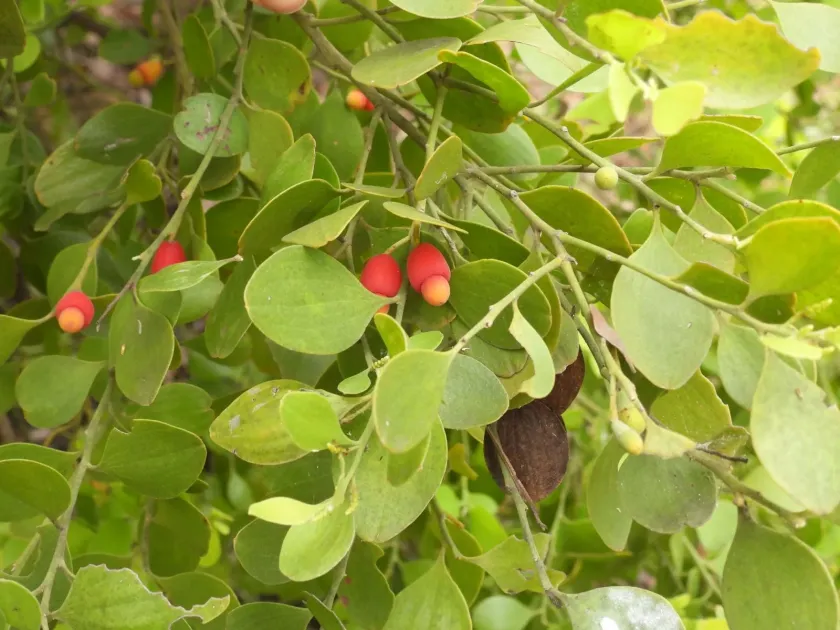
Exocarpos latifolius, commonly known as the broad-leaved sour bush, is an evergreen shrub or tree belonging to the Santalaceae family. A defining biological feature of this species is its hemiparasitic nature, which allows it to derive essential nutrients from the root systems of neighboring host plants.
The native distribution of this plant includes tropical regions of Australia, Malaysia, and several Pacific islands. It typically thrives in well-drained sandy or rocky soils, favoring coastal forests, dunes, and open woodlands where sunlight exposure is abundant throughout the entire year.
Cultivation requires a tropical climate characterized by consistently high temperatures and stable humidity levels. The species is highly sensitive to frost and extreme temperature drops, necessitating shelter and protection in regions where climate fluctuations occur periodically.
Successful agronomic management relies heavily on the presence of suitable host species to support the plant's nutritional needs. In managed landscapes, growers must carefully select companion plants that do not create excessive competition for sunlight or subterranean root space.
Soil quality should remain near neutral or slightly acidic. Drainage is a critical factor for the health of the plant, as waterlogged conditions often lead to severe root rot, which is the most common cause of failure in young plantations or managed exotic gardens.
Harvesting
The harvest of Exocarpos latifolius primarily concerns its fleshy, bright red fruit, which is edible and prized for its unique flavor profile. Harvesting is typically manual due to the delicate structure of the fruit and the brittle nature of the thin, terminal branchlets upon which they grow.
Post-harvest handling is difficult because the fruit has a very limited shelf life, losing freshness quickly after detachment. Consequently, commercial production is generally limited to local markets where the time between harvest and consumption is kept to a minimum.
Beyond its culinary value, the wood of the broad-leaved sour bush is noted for its density and high quality, occasionally used in local carpentry and small-scale ornamental crafts. However, sustainable harvesting is strictly practiced to maintain the ecological balance of native stands.
Ethnobotanical uses include the application of leaves and bark in traditional medicine, where they are utilized for their potential anti-inflammatory properties. Further research into the phytochemical constituents of the plant remains a promising area for modern pharmaceutical development.
Seed propagation is the primary method of cultivation, requiring the selection of fully matured fruits. Once collected, seeds should be processed and planted promptly, as they tend to lose viability quickly if stored under improper humidity or temperature conditions for extended periods.