
Exocarpos cupressiformis
Exocarpos cupressiformis
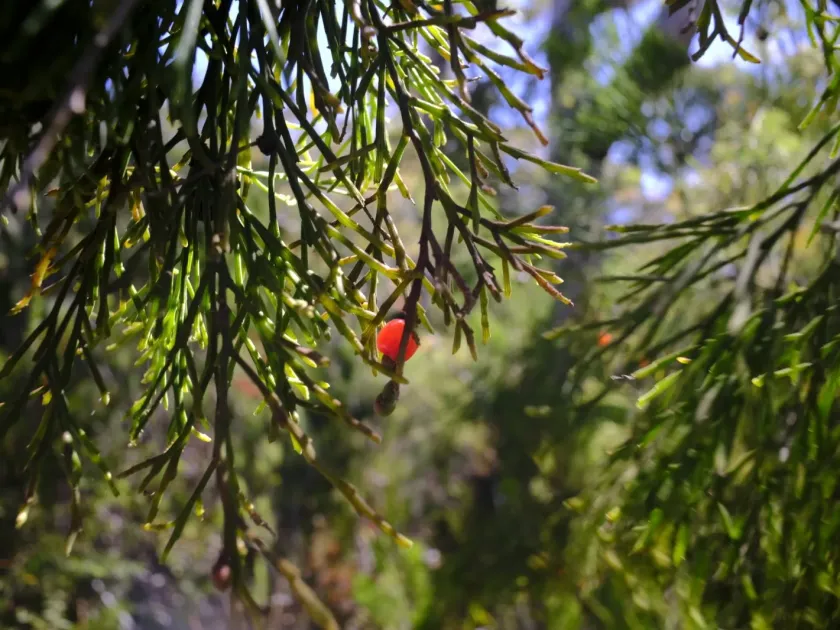
Description
Growing requirements
Exocarpos cupressiformis, commonly known as the native cherry, belongs to the Santalaceae family. It is a distinctive evergreen shrub or tree characterized by its hemi-parasitic lifestyle, as it taps into the roots of other plants to supplement its nutrient intake.
Native to Australia, this species is widely distributed across various states and habitats. It thrives in well-drained soils, ranging from sandy substrates to rocky slopes, demonstrating remarkable adaptability to nutrient-poor environments where other species might fail.
The plant requires ample sunlight for optimal development. As a hemi-parasite, its growth rate is significantly enhanced when it is planted in close proximity to suitable host trees, which provide a reliable source of water and minerals during dry spells.
Botanically, the species is known for its leafless, green, cylindrical branches that resemble cypress foliage, hence the name. This unique structure is a primary adaptation to reduce transpiration in Australia's harsh, sun-drenched climate.
The culinary and ecological value of the plant is notable. The fruit, which is technically a swollen succulent pedicel supporting a small nut, is edible, sweet, and has a long history of traditional use by Indigenous Australians.
Main diseases and pests
The primary threat to Exocarpos cupressiformis is habitat fragmentation caused by human development. The destruction of host plant populations directly interferes with the species' ability to sustain itself, leading to localized declines.
Insect pests, including various native beetles and aphids, may occasionally affect the plant. However, healthy specimens are generally resilient and capable of recovering from minor damage through their natural defensive mechanisms.
Pathogenic threats are usually associated with poor soil management, specifically waterlogging. Anoxia in the root zone can quickly lead to crown rot and other fungal diseases, which are often fatal to the shrub in artificial landscapes.
Invasive plant species can outcompete young seedlings for space and light. Given the plant's relatively slow growth, protecting young individuals from encroaching weeds is essential for successful establishment in a garden or restored area.
Conservation efforts should focus on preserving the diversity of surrounding vegetation. Maintaining a balanced ecosystem where the native cherry can form connections with suitable hosts is vital for the long-term viability of the species.