
Exocarpos strictus
Exocarpos strictus
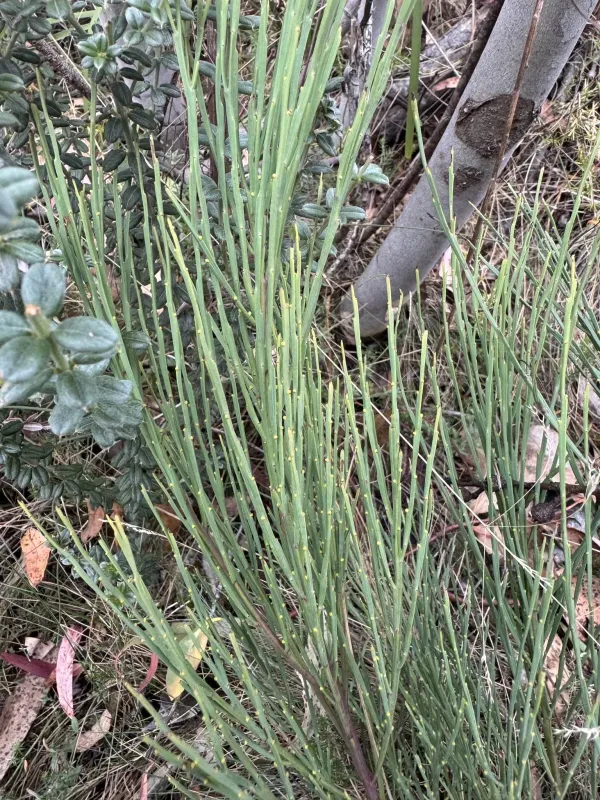
Description
Growing requirements
Exocarpos strictus, commonly known as the pale-fruit ballart, belongs to the Santalaceae family. It is a unique shrub known for its hemiparasitic nature, meaning it photosynthesizes but relies on the roots of host plants to acquire water and essential minerals.
Native to Australia, this plant species is primarily found in forests and woodlands across various states. It is well-adapted to the harsh Australian climate and often thrives in nutrient-poor, rocky substrates.
The climate requirements for this species include temperate conditions with exposure to ample sunlight. The plant has evolved to cope with periodic drought, reflecting the environmental pressures of its natural range.
Soil requirements are centered on excellent drainage. As a hemiparasite, the primary soil consideration is the presence of compatible host plants, as the survival of Exocarpos strictus is inextricably linked to these neighbors.
Agrotechnology for this species is highly specialized. In managed landscapes, it is rarely cultivated as a standard crop, but rather maintained in botanical collections where its complex root interaction with host plants can be preserved and observed.
Main diseases and pests
Major threats to the species involve habitat degradation and the removal of host vegetation. Without a suitable host, Exocarpos strictus cannot sustain its growth, making its conservation reliant on the protection of local biodiversity.
Pest populations that affect this shrub include various local Australian coleoptera and lepidoptera. These insects may target the foliage, causing stress that can stunt growth or lead to secondary infections.
Fungal diseases are a significant risk, particularly under conditions of poor soil aeration or excess moisture. These pathogens can compromise the root system, which is already delicate due to the parasitic attachment mechanism.
Managing the health of the plant involves strict sanitation and avoiding over-watering. Maintaining the environmental balance is essential, as the plant is not equipped to handle high-phosphorus fertilizers or saturated soils.
Sustainable care strategies focus on replicating natural conditions rather than traditional agricultural chemical applications. Monitoring the overall ecosystem health is the most effective approach to mitigating disease outbreaks.