
Exocarpos syrticola
Exocarpos syrticola
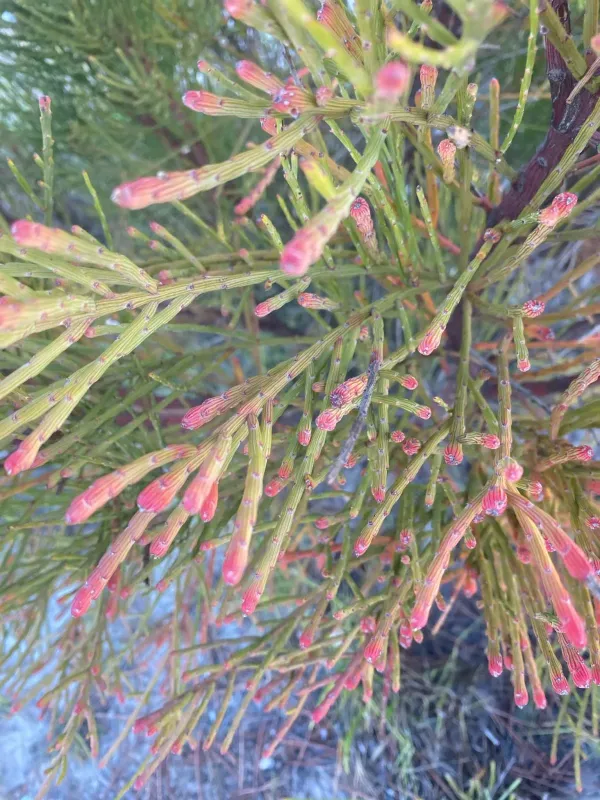
Description
Growing requirements
Exocarpos syrticola is a distinct shrub species belonging to the Santalaceae family. Native to coastal regions of Australia, this plant has evolved to thrive in harsh, saline-exposed environments where few other species can establish themselves.
This species is biologically classified as a hemiparasite. It develops specialized structures known as haustoria on its roots, which allow it to tap into the root systems of nearby host plants to derive necessary water and mineral nutrients from them.
Regarding soil requirements, the plant prefers sandy, well-draining substrates with minimal nutrient levels. In a cultivation setting, mimicking these conditions is essential, as waterlogging is the primary cause of plant failure in this species.
Climatic preferences include high sunlight exposure and a tolerance for saline oceanic winds. It is sensitive to frost and requires a warm, stable climate, making it suitable only for specific geographic zones mimicking its native Australian range.
Cultivation methodology is inherently complex due to the plant's parasitic nature. Successful growth typically requires the presence of compatible host species in the immediate vicinity to support the nutrient requirements of the developing shrub.
Main diseases and pests
Root-related diseases are the most significant threat to Exocarpos syrticola, particularly those induced by excessive moisture or compacted soil. Maintaining a proper gas exchange in the root zone is critical to prevent pathogens from attacking the haustorial connections.
Herbivorous insects in its natural habitat can cause defoliation, though the plant's tough, xerophytic leaves provide some physical protection. Integrated pest management practices should focus on minimal intervention to preserve the delicate balance between the parasite and its host.