
Northern sandalwood
Santalum lanceolatum
Description
Growing requirements
Northern sandalwood (Santalum lanceolatum) is a remarkable tree species belonging to the Santalaceae family. Native to the arid and semi-arid regions of Australia, it is well-adapted to harsh environmental conditions.
The plant is classified as a root hemi-parasite. It possesses the ability to photosynthesize, but it requires attachment to the root systems of host plants via haustoria to extract essential water and nutrients, which is a critical factor for its survival and growth.
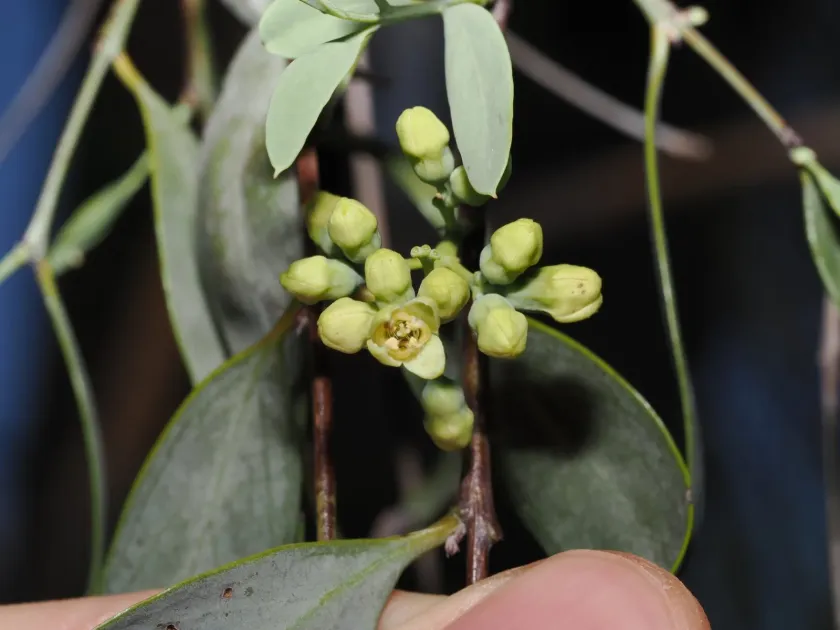
Botanically, it displays lanceolate, grey-green leaves and clusters of small, fragrant creamy-white flowers. Depending on the soil fertility and host availability, the plant can grow into a tree reaching up to 9 meters in height.
The crop requires full sun exposure and thrives in well-drained, sandy, or rocky soils. Poorly drained heavy clays can be detrimental, leading to root rot and eventual plant failure due to its sensitivity to waterlogging.
Successful cultivation involves careful site preparation and the strategic selection of host species. Common hosts include Acacia species, which provide nitrogen and structural support, ensuring the sandalwood thrives in various landscapes.
Yield
Northern sandalwood is primarily cultivated for its high-value essential oil and fragrant heartwood. The industry relies on the accumulation of santalols, which develop gradually as the tree matures over several decades.
The economic potential of a sandalwood plantation is determined by the oil concentration in the heartwood. Typically, the trees require a minimum of 15 to 25 years to develop heartwood of significant commercial quality.
Beyond oil production, the timber is prized for fine woodworking, carving, and religious artifacts. Its natural resistance to pests and decay makes it a premium raw material for high-end decorative goods.
Harvesting is a long-term commitment. Plantation managers must prioritize sustained yields by ensuring a continuous cycle of host plant development alongside the sandalwood trees to maximize growth rates.
Investment in this crop is considered low-maintenance but high-reward, provided that environmental conditions and host-parasite ratios are monitored effectively during the long growth period.
Main diseases and pests
The primary threats to Northern sandalwood are root-borne fungal pathogens. These are often triggered by over-irrigation or soil compaction, which prevents oxygen from reaching the root zone and weakens the tree's defense mechanisms.
Insect pests can cause significant damage to the canopy, particularly during the juvenile phase. Boring insects that target the trunk can compromise the quality of the timber, significantly reducing its final market value.
Vertebrate pests, such as rabbits or kangaroos, pose a major risk to young plantations. Protection measures, including fencing and individual tree guards, are essential until the trees reach a size where they are less vulnerable to browsing.
Weed control is also vital, as invasive species can outcompete the sandalwood and its hosts for water and sunlight, significantly stunting the development of the plantation.
Maintaining a balanced ecosystem on the farm is the most effective strategy for pest management. By avoiding harsh chemical interventions, producers ensure the purity of the aromatic wood and oil, which is essential for pharmaceutical and cosmetic exports.