
Sarcocaulon
Sarcocaulon
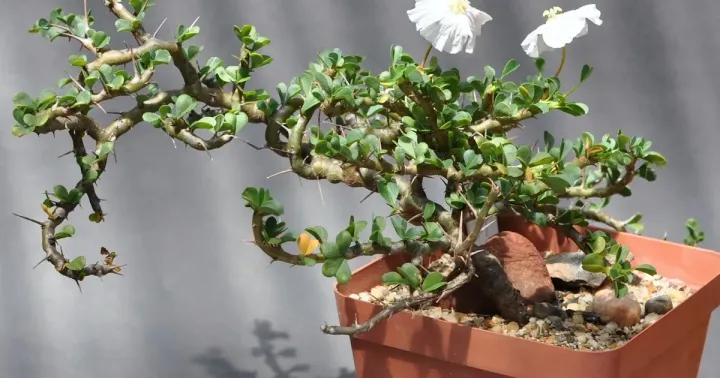
Description
Growing requirements
Sarcocaulon is a fascinating genus of succulent shrubs belonging to the Geraniaceae family. These plants are native to the arid regions of Southern Africa and Namibia, where they have evolved to thrive in high-temperature environments.
Botanically, these plants are known for their thickened, succulent stems often covered in a resinous or waxy layer. This adaptation provides essential protection against extreme evaporation during intense sunlight hours.
Cultivation requirements involve providing intense, direct sunlight. When grown indoors, these plants require the brightest available location, often supplemented by professional LED grow lights to maintain their compact structure.
The substrate must be highly inorganic and porous. A mixture consisting primarily of coarse sand, pumice, and crushed volcanic rock is ideal, as it ensures immediate water drainage after irrigation.
Proper airflow is crucial for the health of Sarcocaulon. While they can handle high temperatures, the combination of stagnant air and humidity significantly increases the stress levels on the plant tissue.
Main diseases and pests
The primary threat to Sarcocaulon is root rot, caused by excessive moisture levels in the growing medium. This condition is almost always fatal and is often the result of poor drainage or overwatering.
Pests such as mealybugs represent a common challenge. These insects tend to hide in the crevices between branches, making them difficult to detect until they have established a significant population.
Spider mites are another concern, particularly in environments with extremely low humidity and high heat. They weaken the plant by piercing the epidermis and damaging the photosynthetic capacity.
Preventative care involves implementing a strict watering schedule that allows the soil to dry out completely between irrigations. Observing the plant's texture during the dormant season is key to health.
If infection or infestation occurs, immediate action is required. This may include manual removal of pests or surgical excision of rotted tissues, followed by the application of appropriate antifungal treatments.