
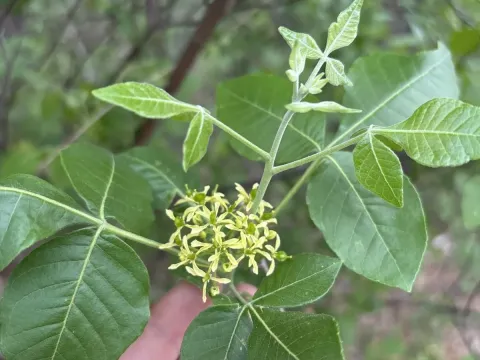
Hoptree
Ptelea
The hoptree, or Ptelea trifoliata, is a deciduous shrub or small tree belonging to the Rutaceae family. Native to North America, this plant is naturally found in diverse habitats, ranging from forests to rocky slopes, demonstrating high ecological plasticity.
What the section contains
Hoptree
Ptelea thrives in full sun or partial shade, making it a versatile choice for landscape design. It is highly valued for its drought tolerance once established, which allows it to survive in areas with irregular precipitation without the need for constant supplemental irrigation.
Soil preferences for the hoptree include well-drained, fertile loams, but it is remarkably adaptable to poorer, rocky, or sandy substrates. It performs best in soils with neutral to slightly acidic pH levels, where its root system can develop without the threat of waterlogging.
The plant is characterized by its trifoliate leaves that emit a distinct aroma when crushed, thanks to the volatile oils in its foliage. Its small, greenish-white flowers appear in dense clusters and are highly attractive to pollinators, providing significant ecological value to local gardens.
In terms of usage, the hoptree serves as an excellent specimen plant, hedging material, or a structural component in mixed shrub borders. Its most unique feature is the winged fruit (samara) that resembles hops, which persists on the branches throughout the winter months.
Ptelea trifoliata is noted for its robustness and relative freedom from serious diseases and pests. Under proper cultivation conditions, it rarely requires chemical intervention, making it a low-maintenance option for sustainable landscaping.
Root rot is the most common concern, usually occurring when the plant is sited in heavy, poorly drained clay soils. Providing a proper drainage layer in the planting pit is the most effective preventative measure against such soil-borne pathogens.
While the tree is hardy, aphids may occasionally infest the tender new growth during the spring season. Integrated pest management strategies, such as attracting beneficial predators or using insecticidal soaps, are sufficient to handle these minor infestations.
Powdery mildew can occasionally affect the foliage if the plant is grown in conditions with stagnant air and high humidity. Improving air circulation through periodic selective pruning of the internal branches is the best cultural control method.
Overall plant health is best maintained by avoiding mechanical damage to the trunk and branches, as wounds can serve as entry points for opportunistic fungi. Clean tools and proper maintenance practices ensure the long-term vitality of the specimen.