
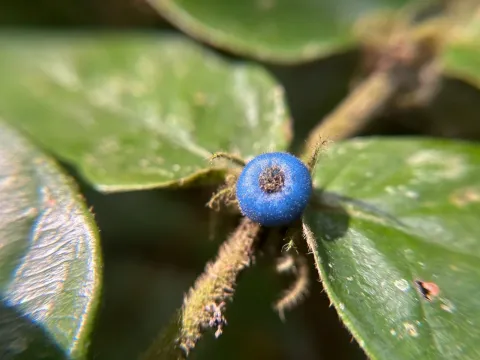
Lasianthus
Lasianthus
Lasianthus is a genus of evergreen shrubs and small trees belonging to the Rubiaceae family. These plants are native to the understories of tropical and subtropical rainforests across Asia, requiring specialized care to thrive in cultivation.
What the section contains
 Hairy Lasianthus
Lasianthus hirsutus
Hairy Lasianthus
Lasianthus hirsutus
 Lasianthus attenuatus
Lasianthus attenuatus
Lasianthus attenuatus
 Lasianthus batangensis
Lasianthus batangensis
Lasianthus batangensis
 Lasianthus chinensis
Lasianthus chinensis
Lasianthus chinensis
 Lasianthus chrysoneurus
Lasianthus chrysoneurus
Lasianthus chrysoneurus
 Lasianthus cyanocarpus
Lasianthus gardneri
Lasianthus gardneri
Lasianthus griffithii
Lasianthus griffithii
Lasianthus cyanocarpus
Lasianthus cyanocarpus
Lasianthus gardneri
Lasianthus gardneri
Lasianthus griffithii
Lasianthus griffithii
 Lasianthus jackianus
Lasianthus jackianus
Lasianthus jackianus
 Lasianthus japonicus
Lasianthus oliganthus
Lasianthus oliganthus
Lasianthus rhizophyllus
Lasianthus rhizophyllus
Lasianthus ridleyi
Lasianthus ridleyi
Lasianthus rigidus
Lasianthus rigidus
Lasianthus japonicus
Lasianthus japonicus
Lasianthus oliganthus
Lasianthus oliganthus
Lasianthus rhizophyllus
Lasianthus rhizophyllus
Lasianthus ridleyi
Lasianthus ridleyi
Lasianthus rigidus
Lasianthus rigidus
 Lasianthus sikkimensis
Lasianthus sikkimensis
Lasianthus sikkimensis
 Lasianthus stipularis
Lasianthus stipularis
Lasianthus stipularis
 Lasianthus strigosus
Lasianthus varians
Lasianthus varians
Lasianthus walkerianus
Lasianthus walkerianus
Lasianthus strigosus
Lasianthus strigosus
Lasianthus varians
Lasianthus varians
Lasianthus walkerianus
Lasianthus walkerianus
Lasianthus
The primary environmental requirement for Lasianthus is a high level of ambient humidity, typically ranging from 70% to 80%. They thrive in environments where temperatures remain stable, ideally between 20°C and 28°C throughout the growing season.
Cultivation requires well-draining, nutrient-rich soil with a slightly acidic profile. Because they naturally grow in forest understories, they must be protected from direct, intense sunlight, which can cause leaf scorch and dehydration.
Watering practices should be consistent, ensuring the substrate remains moist but not waterlogged. The use of filtered or rainwater is recommended, as Lasianthus can be sensitive to chemicals and mineral buildup often found in tap water.
Economically, these plants are primarily valued in ornamental horticulture and botanical research. Certain species within the genus are subject to pharmacological studies due to the secondary metabolites found in their foliage and stems.
Common pests affecting Lasianthus in controlled environments include spider mites and mealybugs. These insects thrive in dry conditions, making the maintenance of proper humidity levels the first line of defense against infestations.
Fungal issues, such as leaf spot and root rot, are significant threats caused by poor drainage and excessive soil moisture. It is crucial to ensure that containers have adequate drainage holes and that the potting mix is properly aerated.
Management of pests often involves biological control or the application of insecticidal soaps. If chemical intervention is necessary, it is essential to use products labeled for tropical foliage to avoid burning the sensitive leaves.
Preventive maintenance includes regular cleaning of the leaves to remove dust and checking the undersides for early signs of pest activity. Maintaining a consistent environment reduces stress, which in turn strengthens the plant's natural immunity.
- Monitor leaf discoloration regularly.
- Avoid overcrowding to improve airflow.
- Sterilize tools between pruning sessions.