
Liberica coffee
Coffea liberica
Description
Growing requirements
Liberica coffee (Coffea liberica) is a member of the Rubiaceae family. This species is an evergreen tree that, under favorable conditions in the wild, can grow up to 18 meters tall, distinguishing it from the shorter Arabica or Robusta trees.
Originating from the low-altitude tropical forests of West and Central Africa, Liberica has been introduced to various regions in Southeast Asia. It is highly valued for its ability to thrive in diverse and often harsh environmental conditions.
The crop requires a warm tropical climate with temperatures between 20°C and 30°C and high humidity. Unlike other coffee species, Liberica is notably tolerant of poor, heavy clay soils, making it a viable option for land that is unsuitable for other coffee varieties.
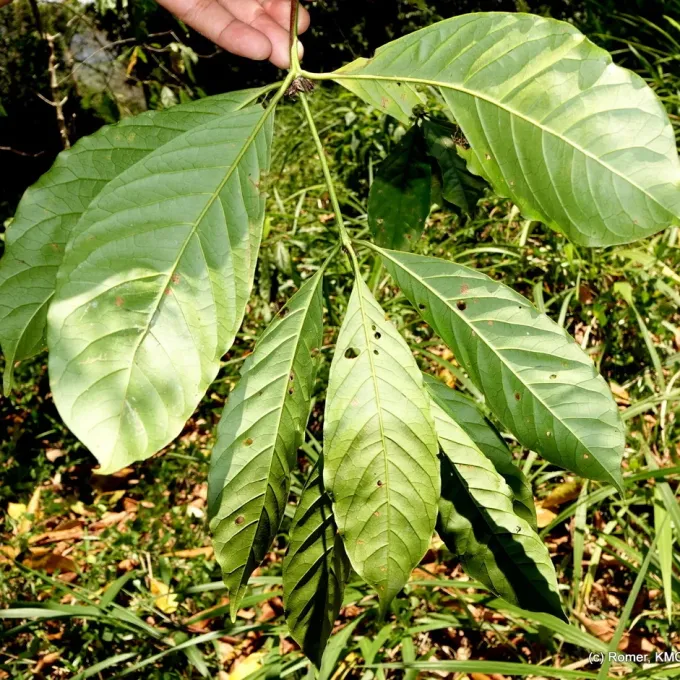
Botanically, the species is identified by its large, leathery leaves and unusually big fruit. The coffee beans are distinctively asymmetric and elongated, providing a unique visual signature compared to other commercial coffee beans.
Agrotechnical management typically involves pruning to manage tree height and structural development. Controlling the canopy density is essential for maintaining plantation health and ensuring efficient light distribution for the developing berries.
Yield
Liberica coffee typically begins to bear fruit within 3 to 5 years after planting. Full commercial production is generally reached after 7 to 10 years, providing a consistent yield for the growers over the long lifespan of the trees.
The economic application of Liberica is specialized. Its flavor profile is often characterized as bold, smoky, and floral. Due to its intense aroma, it is frequently used as a blending component to enhance the overall sensory experience of commercial coffee products.
The harvest cycle for Liberica can be lengthy, with fruit ripening taking up to 12 months. This extended maturation period necessitates careful scheduling of labor to ensure all berries are harvested at their peak physiological maturity.
Processing Liberica requires specialized machinery because of the fruit's thick, fleshy exocarp. Effective post-harvest processing, including fermentation and drying, is critical to ensuring the removal of the pulp without damaging the beans.
Although Liberica holds a niche market share, it is highly appreciated in regions like the Philippines and Malaysia. Its unique qualities ensure a steady demand in local and artisanal markets looking for distinct flavor profiles.
Main diseases and pests
A significant agronomic advantage of Liberica is its inherent resistance to coffee leaf rust (Hemileia vastatrix). This resistance makes it a valuable species for agricultural systems where fungal diseases pose a chronic threat to other coffee varieties.
Despite its robustness, plantations must be monitored for nematodes, particularly in light or sandy soil conditions. Integrated pest management, including crop rotation and soil amendment, is essential to mitigate these underground threats.
The coffee berry borer (Hypothenemus hampei) is the most significant insect pest affecting yield. Effective control involves strict plantation sanitation, ensuring that no infested berries remain on the ground to serve as breeding sites.
Fungal infections of the branches and trunk can occur if humidity levels remain excessively high with poor ventilation. Maintaining proper spacing between trees is a standard preventative measure to ensure airflow and reduce moisture accumulation.
Overall, Liberica is considered a hardy crop that demands less intensive chemical intervention than Arabica. Adherence to basic agricultural protocols usually results in productive and healthy plantations with a long economic life.