
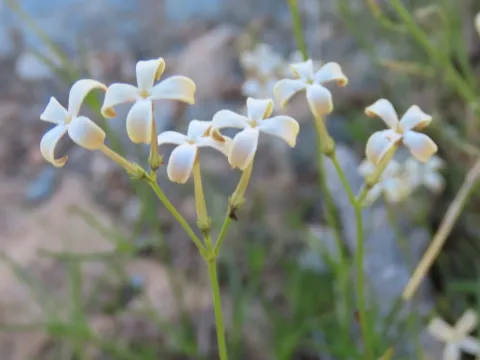
Kohautia
Kohautia
Kohautia is a genus of flowering plants belonging to the family Rubiaceae. It comprises approximately 50 species, which are primarily native to the arid and semi-arid regions of Africa and parts of the Arabian Peninsula, exhibiting remarkable adaptation to harsh environments.
What the section contains
 Kohautia amatymbica
Kohautia amatymbica
Kohautia amatymbica
 Kohautia attenuata
Kohautia attenuata
Kohautia attenuata
 Kohautia caespitosa
Kohautia coccinea
Kohautia coccinea
Kohautia caespitosa
Kohautia caespitosa
Kohautia coccinea
Kohautia coccinea
 Kohautia confusa
Kohautia confusa
Kohautia confusa
 Kohautia grandiflora
Kohautia grandiflora
Kohautia grandiflora
 Kohautia lasiocarpa
Kohautia lasiocarpa
Kohautia lasiocarpa
 Kohautia longifolia
Kohautia longifolia
Kohautia longifolia
 Kohautia senegalensis
Kohautia tenuis
Kohautia tenuis
Kohautia senegalensis
Kohautia senegalensis
Kohautia tenuis
Kohautia tenuis
 Kohautia virgata
Kohautia virgata
Kohautia virgata
Kohautia
The botanical structure of Kohautia is defined by slender herbaceous stems, opposite leaves, and distinctive tubular flowers arranged in cymes. The long, narrow corolla tubes are a diagnostic feature that helps distinguish this genus from other related groups within the coffee family.
In terms of environmental requirements, these plants thrive in well-drained, sandy, or rocky soils. They are physiologically adapted to high solar radiation and irregular rainfall patterns, making them highly resilient to heat stress and prolonged drought conditions.
Regarding agricultural and human use, Kohautia is primarily harvested from the wild for ethnomedicinal purposes. In certain arid regions, it serves as an occasional forage source for livestock, contributing to the vegetation cover of rangelands during the dry season.
There is currently no standardized commercial cultivation protocol for Kohautia. Future interest lies in exploring its phytochemical profile for pharmacological compounds and evaluating its potential as a cover crop for arid land restoration and soil erosion control.