
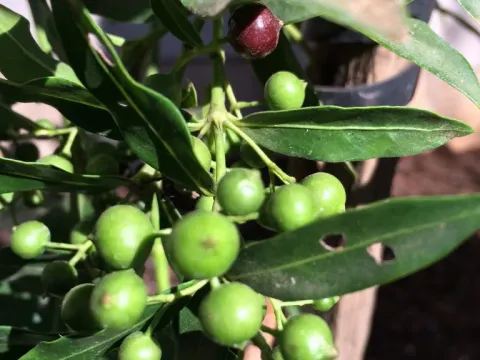
Kraussia
Kraussia
Kraussia is a genus of evergreen shrubs and small trees belonging to the Rubiaceae family. In their natural habitat, these plants are adapted to tropical and subtropical climates, preferring warm and humid regions.
What the section contains

Kraussia
The natural distribution area of Kraussia covers mainly countries in Eastern and Southern Africa. Plants of this genus are often found in the understory of dense forests, where they require protection from direct sunlight and a stable level of humidity.
For successful growth, the crop requires fertile, well-drained soils with a neutral to slightly acidic pH level. Kraussia is highly sensitive to waterlogging in the root zone, making high-quality drainage an essential condition for preventing root rot.
The optimal temperature range for the development of Kraussia is between +20 and +28 degrees Celsius. The plant does not tolerate sharp temperature fluctuations or drafts, which limits its outdoor cultivation strictly to tropical zones.
The economic use of Kraussia is primarily decorative. Due to their beautiful glossy foliage and attractive inflorescences, species of the genus Kraussia are often used in tropical-style landscape design and as greenhouse crops.
Common pests for Kraussia include sap-sucking insects, such as spider mites and scale insects. They can spread rapidly in greenhouse conditions, which requires regular visual inspection of the leaf surface.
Crop diseases are most often associated with improper watering and soil aeration. Poor care practices trigger the development of fungal infections, including powdery mildew and various types of rot that affect the root system and the root collar.