
Lasianthus chinensis
Lasianthus chinensis
Description
Growing requirements
Lasianthus chinensis is an evergreen shrub belonging to the diverse Rubiaceae family, which is widely distributed across tropical and subtropical regions of Asia. This species typically thrives in the understory of dense forests, where it benefits from a protected microclimate.
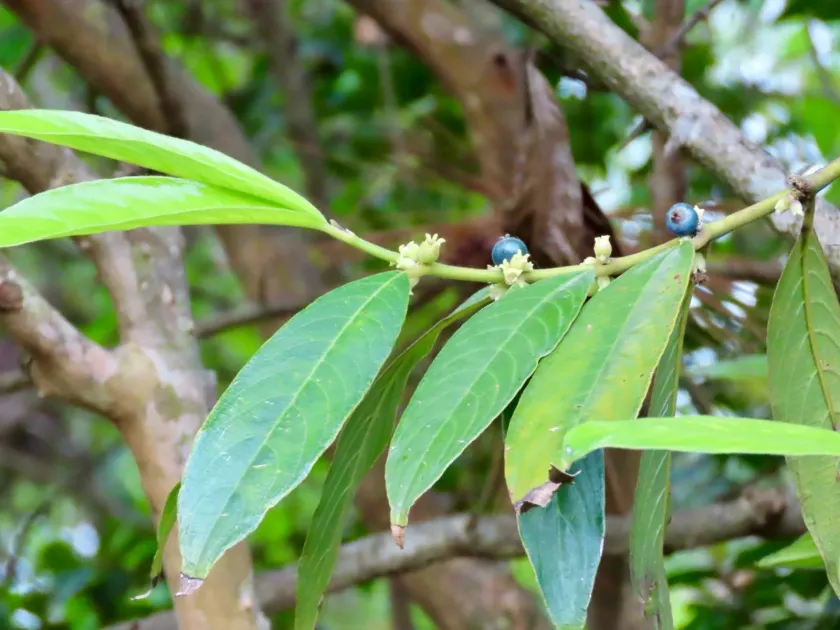
The botanical structure of the plant features opposite leaves with distinct venation and small, inconspicuous flowers often arranged in axillary clusters. These morphological traits assist the plant in conserving moisture and optimizing gas exchange in low-light environments.
Optimal growth conditions for this culture involve a high-humidity environment and steady temperatures. It is highly sensitive to direct, intense sunlight, which can cause leaf scorching, so it should ideally be cultivated in partial shade or filtered light conditions.
Regarding soil requirements, Lasianthus chinensis prefers fertile, well-drained substrates rich in organic matter. Maintaining a slightly acidic to neutral soil pH is beneficial for nutrient uptake and overall plant vigor, while proper drainage prevents root rot.
In terms of хозяйственное (economic) utility, the plant is primarily studied for its potential ethnomedicinal properties. Although not widely cultivated as a staple agricultural crop, it remains a subject of interest for phytochemical research due to its secondary metabolites.