
Lasianthus chrysoneurus
Lasianthus chrysoneurus
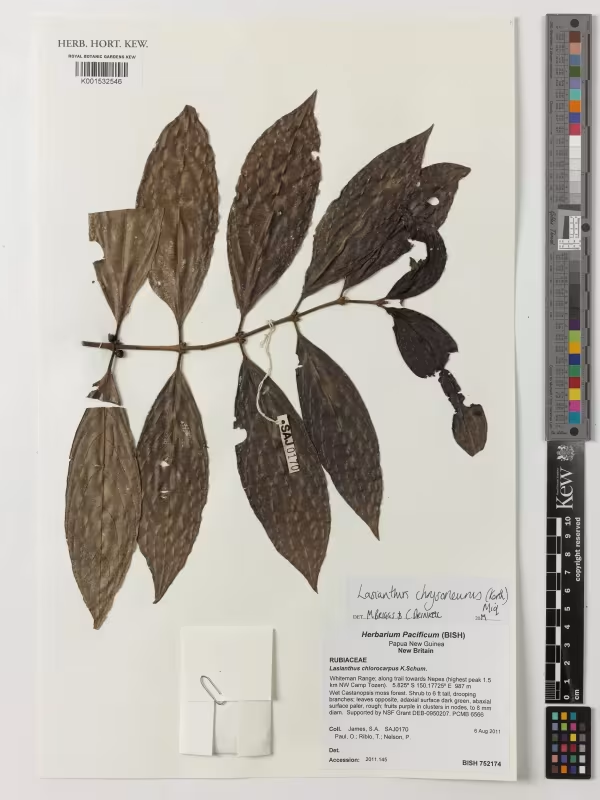
Description
Growing requirements
Lasianthus chrysoneurus is a perennial evergreen shrub belonging to the Rubiaceae family. Native to the humid tropical forests of Southeast Asia, it naturally occupies the understory layer, thriving in shaded and protected environments with high humidity levels.
The botanical structure of this species includes broad, lanceolate leaves and characteristic small flowers that develop into ornamental, often fleshy, drupes. These features require a stable, warm climate for the plant to successfully complete its life cycle and maintain its health.
For successful cultivation, the substrate must be well-drained, acidic, and rich in organic matter. Maintaining a pH level between 5.0 and 6.5 is essential for nutrient absorption. Compaction of the soil must be avoided at all costs to ensure adequate root respiration.
Climate requirements for this culture are strict: it demands temperatures ranging from 22 to 28 degrees Celsius throughout the year. Humidity should remain consistently above 75%, which necessitates the use of humidification systems in controlled environments such as greenhouses.
Maintenance involves careful monitoring for environmental stress. Since Lasianthus chrysoneurus is naturally accustomed to the deep shade of tropical canopies, growers must implement artificial shading to prevent leaf scorching and physiological damage caused by high-intensity light.