
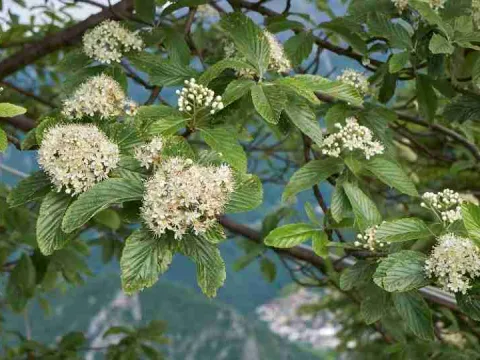
Carpathian mountain-ash
Sorbus carpatica
The Carpathian mountain-ash (Sorbus carpatica), a member of the Rosaceae family, is a deciduous tree native to the Carpathian mountain regions. This species is highly valued for its hardiness and ability to thrive in challenging upland environments where other fruit trees may struggle.
What the section contains
Carpathian mountain-ash
Successful cultivation of Sorbus carpatica requires well-drained, fertile soil that maintains consistent moisture levels without becoming waterlogged. The plant prefers full sun exposure to ensure optimal flower bud development and high-quality fruit ripening during the growing season.
Agricultural management involves routine pruning to maintain the tree's health and structural integrity. Removing dead or diseased branches annually helps facilitate better airflow throughout the canopy, which is crucial for preventing humidity-related issues in the tree structure.
The Carpathian mountain-ash is recognized for its botanical resilience, including a strong root system and resistance to severe frost. These traits make it a sustainable choice for orchards in colder climates, where it can provide consistent yields with minimal winter protection.
Beyond its culinary utility, the tree is frequently utilized in landscape architecture due to its ornamental value. The aesthetic appeal of its foliage and the visual impact of the mature fruit clusters add significant value to both public parks and private agroforestry projects.
Fungal diseases such as rust and leaf spot are the most frequent threats, particularly in areas with high rainfall. Implementation of good horticultural hygiene, including the removal of fallen debris, is essential to minimize the risk of pathogen overwintering.
Insect pests including various borers and fruit moths can cause damage to both the wood and the ripening berries. Producers should monitor the trees closely during the flowering and fruit-set periods to apply effective organic or integrated pest control measures when necessary.