
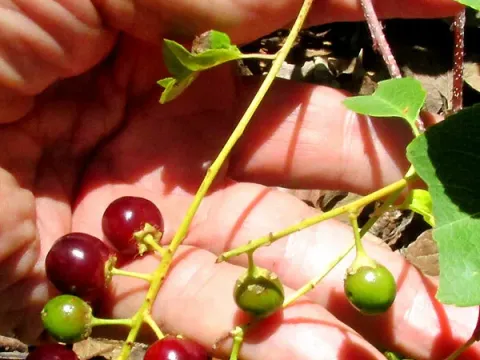
Capollin cherry
Prunus capollin
Capollin cherry (Prunus capollin) belongs to the Rosaceae family and is native to the highlands of Mexico and Central America. It is a tree well-adapted to high-altitude mountainous environments.
What the section contains
Capollin cherry
The tree requires a mild climate with moderate temperatures. It prefers stable weather conditions without significant frosts or extreme heat, which can negatively affect its growth and physiological state.
Optimal growth occurs in deep, fertile, and well-drained soils. Ensuring proper aeration and avoiding waterlogged soil are crucial factors for the health of the root system.
Full sun exposure is required for the plant to thrive, bloom effectively, and produce high-quality fruit. Shady locations often lead to poor canopy development and significantly reduced yields.
Agricultural management involves routine pruning to maintain an open canopy structure, balanced fertilization to support seasonal development, and irrigation during periods of reduced rainfall.
The fruit of the Capollin cherry is characterized by a dark red to near-black color upon reaching full maturity, possessing a unique, slightly astringent flavor profile.
Yield capacity is influenced by tree maturity and environmental factors. Proper horticultural practices, including selective thinning, can improve fruit size and overall production quality.
Uses of the fruit are varied, primarily focusing on culinary applications such as jams, jellies, preserves, and traditional refreshments popular in its native regions.
Rich in anthocyanins and antioxidants, the fruit is valued not only for its distinct taste but also for its potential health benefits, contributing to its demand in local markets.
Commercial potential for this crop lies in its adaptation to specific highland climates, providing opportunities for specialized niche fruit production in tropical and subtropical regions.
Like other species in the Prunus genus, Capollin cherry is susceptible to fungal pathogens such as brown rot and leaf spot, particularly in environments with high humidity.
Pests such as aphids, leaf rollers, and cherry fruit flies can pose significant challenges. Their activity can reduce yield quality and stress the overall vigor of the trees.
Integrated pest management strategies, including monitoring and the use of targeted biological controls, are essential to maintain tree health while ensuring product safety.
Sanitary pruning—removing diseased or dead wood—is a fundamental practice to decrease inoculum pressure and prevent the rapid spread of fungal infections within the orchard.
Constant monitoring of trees for early signs of infestations allows for quick intervention, which is necessary to prevent economic losses during the critical fruit development phase.
Harvesting the Capollin cherry requires careful manual selection, as fruits often ripen at different times, necessitating multiple passes throughout the production season.
Harvest timing is dictated by the transition to a deep, dark color. It is critical to harvest during the cool parts of the day to reduce field heat and prolong shelf life.
Fruits are typically placed in shallow containers to prevent bruising and to ensure that the delicate skin remains intact during transportation from the field to the facility.
Post-harvest management includes rapid cooling of the produce to minimize metabolic decay, ensuring that the fruit reaches the market or processing stage in optimal condition.
Efficiency in harvesting is paramount, as the shelf life of fresh Capollin cherry is relatively short, requiring immediate processing or quick consumption after harvest.