
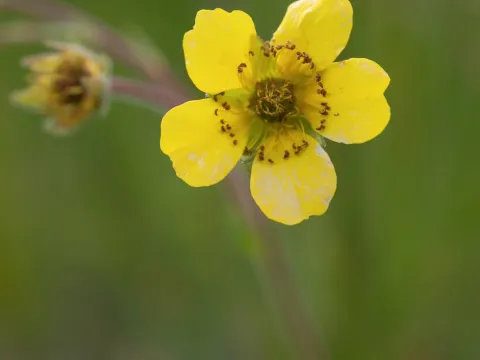
Cape avens
Geum capense
Seeds of Geum capense are typically sown in a greenhouse or cold frame during early spring, specifically in March or April, to establish sturdy seedlings.
What the section contains
Cape avens
For outdoor sowing, it is recommended to plant the seeds in late summer or autumn, allowing them to benefit from cold stratification during the winter months.
The seeds require light to germinate effectively, so they should be sown on the surface of the growing medium or covered only with a very thin layer of soil.
Maintaining a consistent temperature between 18°C and 22°C is essential for uniform germination, which usually occurs within two to three weeks.
Once the seedlings have developed at least two true leaves, they should be transplanted into individual pots to ensure sufficient space for root development.
Geum capense is a perennial herbaceous plant belonging to the Rosaceae family, known for its vibrant flowers and dense basal rosettes.
Native to South Africa, this species performs best in full sun or light shade, requiring well-draining, fertile soil to prevent root stagnation.
The plant demonstrates a strong preference for soil with a neutral to slightly acidic pH, rich in organic matter to support long-term growth.
Regular watering is necessary, especially during the blooming period, but it is critical to allow the soil to dry slightly between irrigation events.
In terms of agricultural maintenance, deadheading spent blooms is recommended to encourage a longer flowering season and prevent premature seed production.
The most common disease affecting Geum capense is powdery mildew, which can spread rapidly in stagnant air or humid conditions during the summer.
Root rot is a significant risk in heavy, clay-based soils that do not provide adequate drainage, often leading to total plant collapse.
Aphids represent a primary pest challenge, frequently attacking the tender buds and young foliage, which can stunt the plant's growth.
Spider mites are another potential threat, particularly during hot and dry spells, as they thrive on the undersides of the leaves in arid environments.
Integrated pest management, including regular inspection and the use of appropriate horticultural soaps, is advised to keep populations under control.