
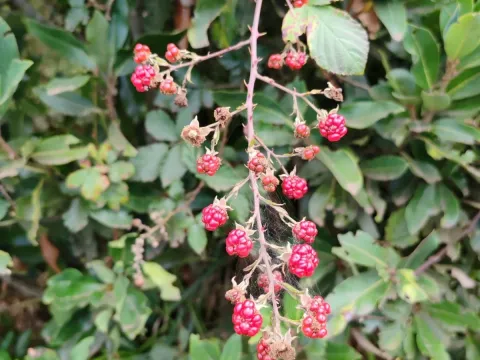
Canary blackberry
Rubus canariensis
The Canary blackberry (Rubus canariensis) is a perennial shrub species belonging to the Rosaceae family. It is endemic to the Canary Islands, where it thrives in specific humid and mild microclimates within forest ecosystems.
What the section contains
Canary blackberry
The plant exhibits typical botanical characteristics of the genus Rubus, including sprawling stems, simple or compound leaves, and a capability to root at the tips. Its morphology allows it to colonize shaded or semi-shaded areas efficiently.
Climate requirements for this species include high humidity and stable temperatures. It is highly sensitive to frost, making it suitable only for regions with mild winters similar to its native subtropical habitat.
Soil management for Rubus canariensis focuses on providing well-drained, nutrient-rich soil with a slightly acidic profile. Incorporating organic matter such as compost or leaf mold is essential to replicate the natural floor of its native woodlands.
Agrotechnical maintenance involves consistent watering, especially during the fruit-setting period. Pruning is necessary to remove dead wood and encourage the growth of new fruiting canes, which ensures the plant remains productive and structurally sound over several years.
The primary threats to this culture are fungal diseases, such as botrytis and rust, which often emerge during prolonged periods of high rainfall or inadequate air circulation around the canopy of the plants.
Pest management focuses on controlling aphids and spider mites, which can proliferate in sheltered environments. Integrated pest management (IPM) strategies, including biological control, are recommended to preserve the quality of the berries and the health of the plants.