
Catalina Cherry
Prunus lyonii
Description
Growing requirements
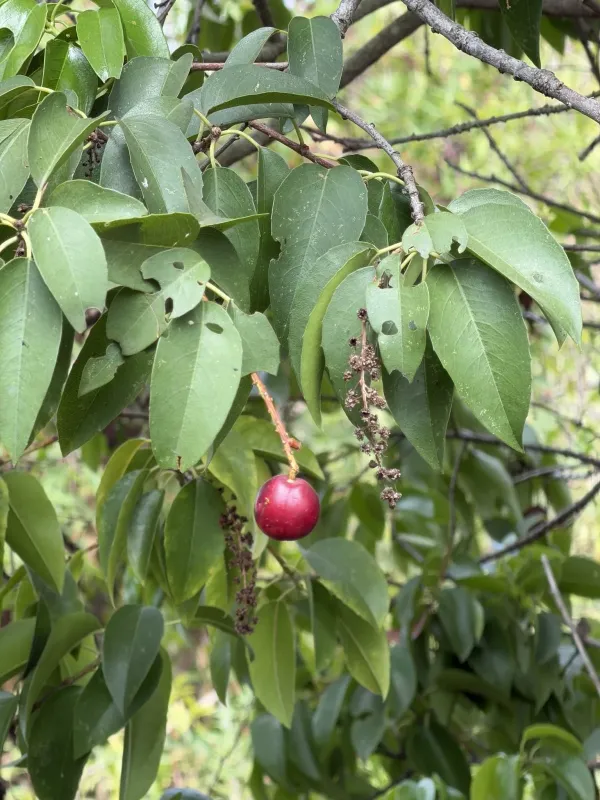
Catalina Cherry (lat. Prunus lyonii) is a distinctive evergreen shrub or small tree belonging to the Rosaceae family. Native to the Channel Islands of California, it is highly valued for its dark, glossy, year-round foliage and its ability to serve as a versatile landscape specimen.
This species thrives in Mediterranean climates and requires a location with full sun to partial shade. Protection from harsh, drying winds is essential for the plant to maintain its lush appearance and to prevent branch breakage or leaf burn during extreme weather conditions.
Regarding soil requirements, the Catalina Cherry prefers well-draining soil types. While it is adaptable to various soil textures including loam and sandy soils, proper drainage is critical to avoid root rot issues, as the species does not tolerate "wet feet" or stagnant moisture in the root zone.
Cultivation practices involve routine pruning to maintain the desired size and shape, as the plant responds well to shearing. It is often utilized as a dense, privacy-screening hedge or as a standalone ornamental tree, providing essential food resources for local bird populations through its small fruits.
Watering should be managed carefully; young trees need consistent moisture to establish their root systems, whereas mature specimens demonstrate moderate drought tolerance. Mulching around the base can help maintain soil moisture levels and suppress weed growth, fostering a healthy environment for the plant.
Main diseases and pests
Common pests associated with Prunus lyonii include scale insects and aphids, which may cluster on new growth and stems. Integrated pest management, involving the use of horticultural oils or soaps, is typically effective in controlling these infestations without harming the tree's health.
The plant is susceptible to various fungal pathogens, particularly if grown in environments with high humidity and poor air circulation. Leaf spot and root-related pathogens remain the primary concerns, necessitating proper spacing between plants and careful attention to irrigation frequency.