
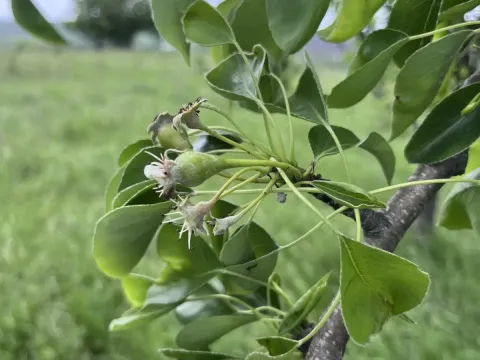
Caucasian pear
Pyrus caucasica
The Caucasian pear (Pyrus caucasica) is a member of the Rosaceae family, widely recognized in pomology for its robustness and role as a high-quality rootstock for various cultivars.
What the section contains
Caucasian pear
It typically inhabits mountainous regions and forest margins, showing exceptional adaptation to a variety of soil types ranging from rocky terrain to deep, fertile loams with excellent drainage.
This species is characterized by a strong, deep-reaching taproot system that grants the tree superior drought resistance compared to many other domesticated fruit tree species.
Climatically, it thrives in moderate zones but exhibits enough frost resistance to serve as a reliable foundation in diverse latitudes, supporting the vigor of the grafted scion.
Management of this crop involves long-term planning, as trees grown from Pyrus caucasica seeds are highly valued for their longevity, often lasting for several decades in commercial orchards.
The most significant pathological threats to Pyrus caucasica include Fire Blight (Erwinia amylovora) and scab, which are favored by high humidity and fluctuating spring temperatures.
Pest populations such as aphids and leaf-rolling moths can significantly impact the health of young seedlings, necessitating systematic scouting and Integrated Pest Management (IPM) practices.
Overhead irrigation should be avoided in nurseries where this species is cultivated to minimize the risk of moisture-loving fungal pathogens developing on the foliage.
Site selection is critical; ensuring adequate air circulation around the canopy helps to significantly reduce the incidence of many common fungal and bacterial infections.
- Fire Blight (Erwinia amylovora)
- Pear Scab (Venturia pyrina)
- Aphids
- Leaf-rolling moths