
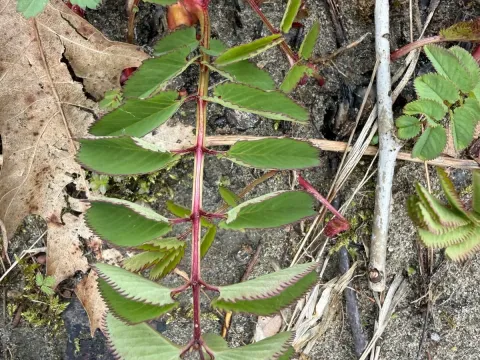
Canadian burnet
Sanguisorba canadensis
The sowing of Canadian burnet (Sanguisorba canadensis), a member of the Rosaceae family, is recommended in early spring or late autumn to facilitate natural seed stratification. The optimal timeframe is when soil temperatures reach 10-12 degrees Celsius.
What the section contains
Canadian burnet
Seeds should be sown at a depth of 1–2 centimeters in prepared, loose soil. This culture is characterized by slow development during its first year, making timely weed control essential during the initial growth stages.
With spring sowing, seedlings typically emerge within 2–3 weeks, provided there is adequate soil moisture. It is crucial to maintain optimal stand density, ensuring sufficient space for the development of a robust root system.
In industrial cultivation, a row-sowing method with 30–45 centimeters between rows is practiced. This facilitates subsequent maintenance and mechanized inter-row cultivation to improve root system aeration.
To accelerate germination, seeds can be soaked in growth stimulants or cold water prior to sowing. This technique helps increase field emergence rates and ensures more uniform development of seedlings across the field.
Canadian burnet is a moisture-loving perennial culture native to North America. It thrives in well-moistened soils, often growing in river floodplains, damp meadows, and along the edges of wetlands.
The plant demonstrates high winter hardiness and is capable of withstanding significant temperature fluctuations, allowing it to be grown in temperate climate zones. It does not tolerate prolonged drought and requires supplemental irrigation during critical growth phases.
Soil preferences include organic-rich loams with a neutral or slightly acidic reaction. Despite its affinity for moisture, a key requirement is the absence of stagnant water, as waterlogging can lead to root rot.
Light exposure must be sufficient for efficient photosynthesis; the plant develops better in open areas, although it can tolerate light shading. In high-sunlight conditions, it is important to monitor the moisture level of the topsoil layer.
Agronomic practices include the incorporation of organic fertilizers before plowing, which promotes the development of a powerful taproot. The plant responds well to phosphorus-potassium fertilization, which increases its overall resistance to adverse environmental factors.
The economic utility of Canadian burnet is focused on forage production and its use as medicinal raw material. Yields of green biomass depend heavily on field moisture levels and overall soil fertility.
Average biomass yields under intensive grassland management can range from 15 to 25 tons per hectare. The crop is characterized by high nutritional value, being rich in protein and minerals, which makes it a valuable component in grass mixtures.
As a medicinal plant, the rhizomes are valued for containing tannins, Vitamin C, and flavonoids. Harvesting of the rhizomes is usually performed in the 3rd or 4th year of vegetation, which ensures maximum concentration of active biological compounds.
Productivity increases with regular nitrogen fertilization during the early spring period. This stimulates active vegetative growth and contributes to a larger volume of the basal leaf rosette.
The use of Canadian burnet as a honey plant is also an important aspect. Its long flowering period allows for a stable nectar source for apiaries located in close proximity to the crop plantations.
The primary threats to Canadian burnet are fungal diseases that develop under conditions of high humidity and poor soil aeration. Leaf spot and powdery mildew are among the most common issues encountered.
Pests, such as aphids and various types of weevils, can damage young shoots and leaves. Regular monitoring of the fields allows for the timely identification of infestation hotspots and the application of biological control methods.
Root rot poses a serious danger, especially in heavy, poorly drained soils. For prevention, it is recommended to follow crop rotation practices and avoid overcrowded stands, which contribute to moisture stagnation at the base of the stems.
Inter-row cultivation is used to combat weeds during the early developmental stage. Chemical control with herbicides requires caution, as the plant can be sensitive to specific active ingredients.
Timely harvesting and aeration of the mown biomass are essential measures to prevent mold in the raw material. Adhering to proper storage protocols for the harvest helps prevent quality losses due to secondary fungal infections.
Harvesting the green biomass of Canadian burnet is carried out during the flowering phase, when the concentration of nutrients in the vegetative parts of the plant reaches its peak. This ensures the production of the highest quality hay or silage.
For the harvesting of medicinal raw material, rhizomes are dug up in autumn or early spring. After extraction from the soil, the roots are thoroughly cleaned of dirt, washed in running water, and the aerial parts of the plant are removed.
Drying of the rhizomes is conducted in well-ventilated rooms or in driers at temperatures not exceeding 50-60 degrees Celsius. Properly dried raw material retains its properties for several years if stored in a dry location.
Mechanization of biomass harvesting is achieved using mowers followed by tedding. This is necessary to accelerate the dehydration process while preserving the color and aroma of the resulting forage material.
The optimal cutting height is approximately 5–7 centimeters. This approach helps preserve the renewal buds, ensuring successful regrowth of the culture in the following growing season and the longevity of the stands.