
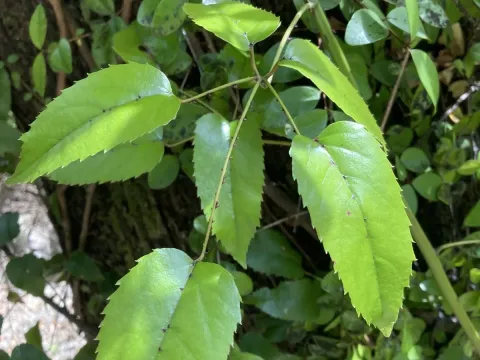
Bush lawyer
Rubus cissoides
Rubus cissoides, commonly known as bush lawyer, is a woody vine belonging to the Rosaceae family. It is native to the forests of New Zealand, where it is known for its distinctive thorny stems that allow it to scramble through dense vegetation.
What the section contains
Bush lawyer
The plant thrives in temperate climates with high humidity levels and requires a location that provides partial shade. It is not well-suited to regions with extreme frost, as its thin stems are susceptible to damage from low temperatures.
Soil requirements focus on high organic matter content and excellent drainage capacity. While the plant prefers neutral soils, it can adapt to slightly acidic conditions if adequate aeration is provided for the root system.
In terms of agricultural maintenance, providing structural support is essential. Due to its climbing nature, the bush lawyer requires sturdy trellises or existing trees to support its vertical development and ensure proper light exposure.
Economic use is primarily focused on environmental restoration and ornamental barrier hedging. Its exceptionally sharp, backward-curving prickles make it an effective natural fence against wandering livestock.
Like many members of the genus Rubus, this species is susceptible to various fungal pathogens. Rust and leaf spot are common concerns, especially in areas with poor airflow and high persistent moisture.
Common insect pests include aphids and spider mites, which can proliferate rapidly during dry weather. These pests target succulent young growth, often leading to stunted development or yellowing leaves.
Maintaining clear spacing between individual plants is the most effective way to prevent the rapid spread of infections. Regular pruning of old, non-productive wood helps improve air circulation within the canopy.
Monitoring for signs of root rot is crucial, as this condition often arises from waterlogged soil. Ensuring that the planting site has sufficient depth and porosity is the primary preventive measure.
Biological control methods and regular sanitation pruning are recommended to keep pest populations at manageable levels without heavy reliance on synthetic chemical treatments.