
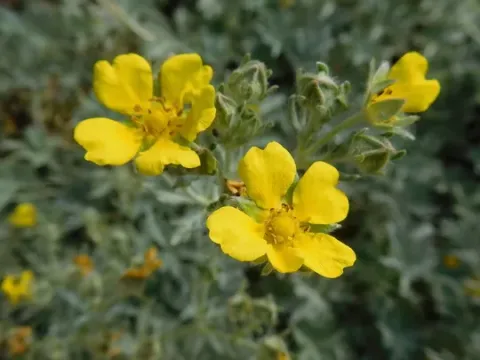
Calabrian cinquefoil
Potentilla calabra
Calabrian cinquefoil (Potentilla calabra) is a perennial herb belonging to the Rosaceae family. Seeds require a stratification period to break dormancy and ensure uniform germination when sown in early spring.
What the section contains
Calabrian cinquefoil
The seeds should be sown at a shallow depth of approximately 0.5–1 cm in well-prepared, loose soil. Maintaining consistent moisture is critical during the initial germination phase to ensure successful plant establishment.
Vegetative propagation by dividing mature clumps is often preferred for commercial cultivation. This method guarantees genetic uniformity and allows for faster crop production compared to growing from seeds.
Plant spacing should be optimized to allow for proper airflow and root expansion, with a recommended distance of at least 30–40 cm between plants. This prevents the overcrowding that often leads to increased humidity around the foliage.
Young transplants require careful monitoring and moderate shading until they have developed a robust root system. Once established, they adapt quickly to their permanent site, showing excellent resilience to environmental stress.
This species thrives in sunny locations with well-drained, sandy, or rocky soil. Being a mountain-origin plant, it is highly adapted to mineral-rich substrates that are not prone to water retention.
Excessive soil moisture is detrimental to the plant, often causing root decay. Therefore, choosing a site with a natural slope or installing an effective drainage system is essential for long-term health.
Water requirements are relatively low, as the plant possesses a deep root system capable of accessing subsurface moisture. Supplemental irrigation should only be provided during prolonged drought periods in the flowering phase.
Fertilization should be kept to a minimum, as the plant prefers lean soils. Nitrogen-heavy fertilizers are counterproductive, as they encourage excessive vegetative growth at the expense of root development and cold hardiness.
The Calabrian cinquefoil is cold-hardy and well-suited for temperate climates. However, in regions prone to harsh, snowless winters, mulching can help protect the root crowns from extreme freezing temperatures.
Powdery mildew is the most common disease, often appearing when humidity is high and airflow around the plants is restricted. Pruning foliage to encourage ventilation is a primary preventative measure.
Root rot caused by stagnant water is a significant threat, especially on heavy clay soils. Ensuring proper soil structure and drainage is the most effective strategy to prevent this condition.
Pests such as aphids and leaf rollers may occasionally infest the plants, particularly during the rapid spring growth phase. Integrated pest management using biological controls is recommended for a sustainable approach.
Root-dwelling insect larvae can damage the plant's health, making it more susceptible to soil-borne pathogens. Maintaining crop rotation and healthy soil life helps to keep these pests under control.
Avoid heavy chemical treatments, as the plant is sensitive to various herbicides and pesticides. Keeping the growing area weed-free is crucial to reduce competition and the prevalence of host plants for various pests.
The harvest of Calabrian cinquefoil is best performed during full bloom when the concentration of secondary metabolites is at its peak. This timing ensures the highest quality of the final herbal product.
The aerial parts are cut 5–10 cm above the ground. This partial harvest leaves enough foliage for the plant to recover and photosynthesize, ensuring its viability for the next growing season.
Harvested material must be dried immediately in a clean, ventilated, and shaded area. Avoid drying at high temperatures, which can lead to the loss of volatile compounds and diminish the plant's efficacy.
Once dried, the plant material should be stored in opaque, moisture-proof containers to protect its color and medicinal properties. Proper storage conditions are essential to prevent mold and loss of quality.
For large-scale cultivation, mechanical harvesting using tractor-mounted mowers is efficient. Setting the cutting height correctly is vital to maximize yield while preserving the perennial rootstocks for future years.