
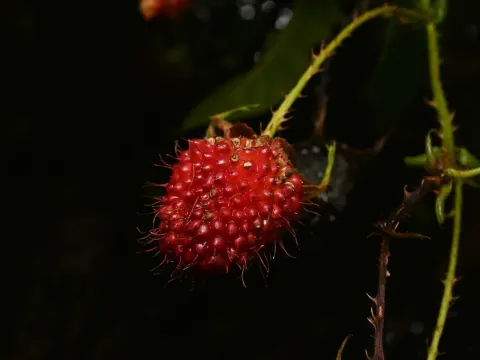
Rubus roseus
Rubus roseus
Rubus roseus is a perennial shrub belonging to the Rosaceae family. Known for its distinct growth habit, it is native to the high-altitude regions of the Andes in South America, thriving in temperate to cool tropical mountain environments.
What the section contains
Rubus roseus
This species is well-adapted to specific soil conditions, preferring rich, loose, and well-drained volcanic or loamy soils. It requires consistent moisture levels to sustain its vegetative growth and berry production, making proper irrigation scheduling essential for commercial success.
Climate requirements include protection from extreme heat and direct, harsh sunlight. In cultivation, the plant benefits from semi-shaded locations or consistent irrigation that cools the leaf canopy during peak daytime temperatures in lowland or warmer regions.
Agronomic management involves regular pruning to stimulate new shoot growth. Since the plant produces berries on lateral branches, guiding these shoots along a trellis or support structure is standard practice to optimize light interception and facilitate harvesting operations.
Nutrient management is crucial; the plant responds well to balanced organic fertilization during the early spring and post-harvest periods. Maintaining an ideal pH level between 5.5 and 6.5 ensures optimal uptake of micronutrients necessary for the development of healthy foliage and fruit.
The primary threats to Rubus roseus include fungal diseases such as powdery mildew and various leaf spot pathogens. These conditions are exacerbated by high humidity, poor air circulation, and improper canopy density, which prevent foliage from drying quickly.
Pest pressures are primarily caused by mites and aphids that target the tender terminal shoots. Infestations can lead to stunted growth and reduced yields if not identified and addressed early through systematic monitoring of the plantation.
Root health is a major concern, particularly in poorly drained soils where Phytophthora species can cause root rot. Implementing raised beds or improved drainage systems is a critical prophylactic measure for long-term plantation viability.
Effective pest management relies on a combination of cultural practices, such as removing infected plant debris, and the use of integrated pest management (IPM) strategies. This minimizes the reliance on broad-spectrum chemicals, preserving beneficial insects in the ecosystem.
Regular monitoring of environmental conditions is necessary to anticipate disease outbreaks. During periods of excessive rainfall, preventive applications of copper-based fungicides or biological control agents may be required to protect the crop from opportunistic pathogens.