
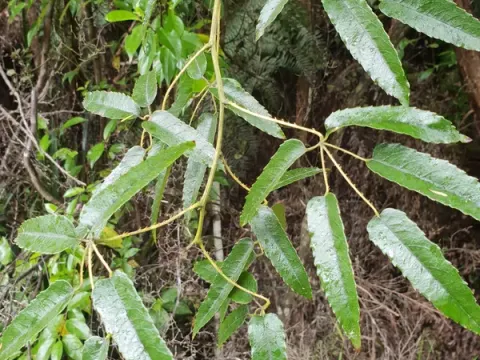
Rubus schmiedelioides
Rubus schmiedelioides
Rubus schmiedelioides is a perennial shrub species belonging to the Rosaceae family. As a part of the vast Rubus genus, it shares common structural features with other blackberries and raspberries, though it occupies a unique ecological niche.
What the section contains
Rubus schmiedelioides
The botanical structure of this plant consists of robust canes and compound leaves, typical of the genus. Its reproductive cycle involves the development of aggregate fruits that provide a food source for local fauna and have potential for human consumption.
The plant originates from tropical regions where it thrives in moist forest environments. It is adapted to canopy-filtered sunlight, preferring habitats where humidity levels remain high throughout the year to support its delicate foliage.
Success in cultivation requires specific soil conditions, ideally well-draining, nutrient-dense organic soils. The root system is sensitive to waterlogging, necessitating a balanced irrigation strategy that keeps the soil consistently moist but never saturated.
Thermal requirements for Rubus schmiedelioides are strictly tropical. It lacks frost tolerance and requires stable temperatures to maintain metabolic functions. Any significant deviation from these climate parameters can lead to stunted growth or total failure of the crop.
The harvest of Rubus schmiedelioides is traditionally done by hand, targeting ripe berries that have developed the desired sugar-to-acid ratio. Due to the delicate nature of the fruit, careful handling is required to prevent bruising and post-harvest decay.