
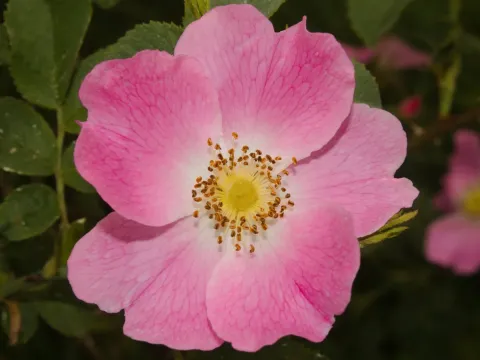
Sherard's rose
Rosa sherardii
Sherard's rose, known scientifically as Rosa sherardii, is a perennial shrub belonging to the Rosaceae family. It is native to various parts of Europe, typically inhabiting scrublands, woodlands, and mountainous regions, displaying high ecological plasticity.
What the section contains
Sherard's rose
Botanically, the plant is distinguished by its pubescent, grey-green foliage and strong, often curved prickles on its branches. This species can grow up to two meters in height, forming dense thickets that serve as natural shelter for various wildlife species.
Regarding cultivation, this rose prefers well-drained loamy soils and requires full sun to partial shade for optimal growth. It is highly valued for its winter hardiness, allowing it to thrive in colder European climates without the need for intensive protection.
Agronomic management involves regular pruning to ensure healthy growth and control the density of the shrub. As a hardy plant, it requires minimal fertilization, though balanced nutrients can promote more vigorous floral and fruit production during the growing season.
Economically, Rosa sherardii is utilized in landscape design for hedge creation, as a robust rootstock for cultivated rose varieties, and for its fruit, which contains valuable compounds beneficial for dietary and pharmaceutical applications.
Like many species in the genus, this rose is susceptible to common fungal diseases such as powdery mildew and black spot. Proper sanitation, including the removal of infected fallen leaves, is crucial for maintaining plant health.
Insects such as aphids, rose chafers, and leaf rollers are typical pests affecting the species. Monitoring early in the season is recommended, with integrated pest management (IPM) techniques being the most sustainable approach for controlling infestations.