
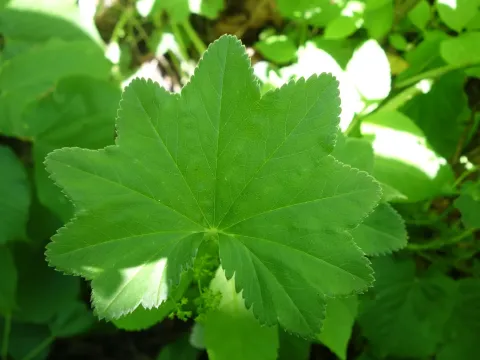
Shiny lady's-mantle
Alchemilla micans
Shiny lady's-mantle is a perennial herbaceous plant belonging to the Rosaceae family. The seeds of this crop have moderate germination rates, but they often benefit from a stratification process to ensure more uniform emergence in field conditions.
What the section contains
Shiny lady's-mantle
The optimal time for sowing in open ground is late autumn, which allows the seeds to undergo natural winter chilling. For spring sowing, using the seedling method is recommended to control plant density and prevent competition from weeds.
The seeds are very small and should be sown at a minimal depth, ensuring they receive sufficient light to trigger germination. Rows should be spaced approximately 40 centimeters apart to provide enough space for root development.
Initial growth is slow, with the plant dedicating its first year to forming a robust basal rosette of leaves. The crop reaches its full productive potential starting from the second year of vegetation.
Vegetative propagation via root division is the most effective method for establishing commercial plantations. This procedure is best performed in early spring or late summer when soil moisture is adequate to support root establishment.
This crop has moderate environmental requirements, preferring sunny to partially shaded locations with consistently moist soil. It is highly responsive to soils rich in humus and organic content.
Loamy, neutral, or slightly acidic soils are ideal for the development of Alchemilla micans. Good drainage is essential, as waterlogged conditions can lead to root rot and other physiological disorders.
The plant is highly frost-hardy, making it suitable for cultivation in temperate climates. During dry spells, regular irrigation is necessary to maintain the plant's turgor and foliage health.
To promote vigorous green mass growth, it is recommended to apply balanced mineral fertilizers at the beginning of the growing season. Incorporating organic matter during soil preparation is also highly beneficial.
Early in the plantation's life, weed control is crucial to prevent competition. Once established, the dense leaf rosettes of the lady's-mantle effectively suppress most weed species.
Yields of Shiny lady's-mantle depend significantly on plant density and the overall agronomic strategy. In commercial production, the aerial parts are harvested during the peak flowering stage.
Average yields of dry medicinal mass range from 1.5 to 3 tons per hectare depending on site fertility. Maximum productivity is typically observed from the third to the fifth year of the plantation's life cycle.
The main use of the crop is in the pharmaceutical industry due to its high concentration of tannins and flavonoids. It is also valued as a durable groundcover in ornamental gardening.
Harvesting is performed either mechanically or manually, followed by immediate processing. Careful drying is required to preserve the chemical integrity of the harvested material.
An average plantation cycle lasts 5 to 7 years, after which the plot should be renewed to maintain yield quality and plant vigor. Crop rotation helps prevent soil depletion and pathogen buildup.
The primary diseases affecting this crop are fungal infections, such as powdery mildew and leaf spot. Preventive measures include maintaining optimal plant spacing and ensuring good airflow within the canopy.
Insects and aphids can occasionally damage the foliage, negatively impacting the market value of the raw material. Integrated pest management using biological controls is the preferred approach.
Soil-borne pests like wireworms can threaten young plantations on newly cultivated land. Deep plowing and proper land preparation are recommended before initial planting to minimize these risks.
Removing plant debris immediately after harvest helps reduce the infectious load in the field. Healthy plants are generally resistant, so prioritizing overall crop vigor is the best defense.
- Powdery mildew
- Leaf spot
- Aphids
- Wireworms
Harvesting should be conducted during the mass flowering phase, as this is when the concentration of beneficial bioactive compounds in the leaves and stems is at its peak.
The plants are mown at a height of 5-10 centimeters above the soil level using specialized equipment. Care must be taken not to damage the central growth point, allowing for successful regrowth.
The harvested material must be transported to the drying facility immediately. Allowing cut mass to sit in piles can cause rapid fermentation, overheating, and loss of quality.
Drying is performed in climate-controlled rooms or under well-ventilated sheds at temperatures not exceeding 40 degrees Celsius. Exposure to direct sunlight must be avoided to prevent chlorophyll degradation.
Once dried to the required moisture level, the material is packed into breathable bags and stored in a cool, dry place. Strict adherence to these storage conditions ensures long-term product shelf life.