
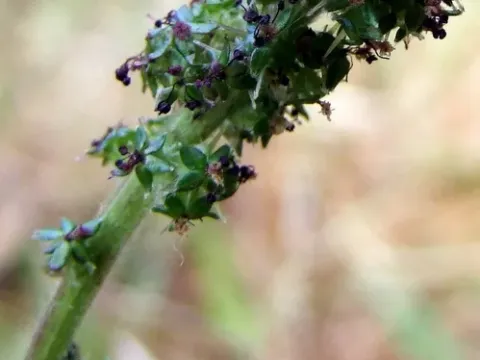
Sheep's burr
Acaena ovina
Sheep's burr (Acaena ovina) is a herbaceous perennial plant belonging to the Rosaceae family. It is widely recognized for its creeping habit and delicate, fern-like foliage, making it a popular choice for groundcover in gardens.
What the section contains
Sheep's burr
The plant originates from Australia and New Zealand, thriving in varied environments including grasslands and open woods. Its ability to colonize areas makes it an excellent plant for erosion control and covering large, difficult-to-mow garden spots.
Botanically, it features pinnate leaves and small, greenish flower heads. The seeds are enclosed in prickly burs, a survival mechanism that allows them to disperse by clinging to the fur of animals, which explains the common name.
For cultivation, seeds should be sown in the spring or late autumn. Sowing in pots is recommended for better control over germination conditions, followed by transplanting the seedlings once they have developed a strong root system.
Proper spacing is crucial when planting out. Placing plants approximately 25 cm apart ensures a consistent cover within one or two seasons, preventing weed establishment between individual plants.
This species requires well-drained, sandy, or loamy soil to perform optimally. It is essential to ensure that the site does not collect standing water, as stagnant moisture is detrimental to the plant's long-term health.
Regarding light, it prefers full sun but demonstrates good tolerance for partial shade. In extremely hot climates, some shade during the afternoon hours helps maintain the foliage color and prevents the plant from drying out.
Watering needs are moderate. While the plant is somewhat drought-tolerant once established, providing consistent moisture during the initial growth phase encourages faster spreading and denser leaf development.
The plant exhibits moderate frost hardiness. In regions with severe winters, a layer of mulch or protective covers can protect the crown of the plant, ensuring it survives until the following spring for new growth.
Feeding requirements are minimal; a light application of a balanced, slow-release fertilizer in early spring is sufficient to maintain plant health and encourage vigorous growth for the coming season.
Root rot is the most common threat, usually caused by overwatering or poor soil drainage. Maintaining a proper watering schedule and ensuring good airflow around the plants significantly reduces this risk.
Pests are generally not a concern for Acaena ovina. However, slugs and snails can occasionally graze on young foliage. Monitoring the garden during wet seasons and using natural deterrents is usually sufficient to manage these populations.