
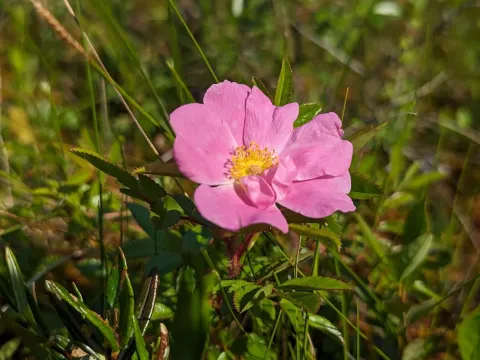
Shining rose
Rosa nitida
The Shining rose, botanically known as Rosa nitida, is a deciduous shrub belonging to the Rosaceae family. It is native to the northeastern regions of North America, where it thrives in moist meadows, wetlands, and open woodlands.
What the section contains
Shining rose
This species is highly valued by gardeners for its exceptional hardiness and adaptability. It forms a dense, low-growing shrub that typically reaches heights of 0.5 to 0.9 meters, making it ideal for the front of border plantings or mass ground cover.
The plant requires full sun to partial shade to achieve its best performance. While it is tolerant of various soil types, it prefers acidic or neutral moist soils. Its unique ability to withstand wet soil conditions distinguishes it from many other rose varieties.
Botany-wise, the plant is characterized by its thin, heavily prickled stems and glossy, shiny foliage that gives the plant its name. The flowers are small, single, and pink, appearing in early summer and creating a delicate contrast with the green leaves.
Seasonal change brings significant interest to the landscape. In autumn, the foliage transitions from deep green to vibrant shades of red and purple, while the small, globular red hips remain on the branches, providing winter food for local wildlife.
Rosa nitida is generally considered a disease-resistant shrub. However, in poorly ventilated environments or during periods of high humidity, it can be susceptible to powdery mildew, which manifests as a white coating on the leaves.
Aphids are the most common pests, typically attacking young, tender growth during the early summer season. Gardeners should monitor the plants regularly and use mild treatments or biological controls to keep populations in check without harming beneficial insects.
Root rot remains a potential threat if the shrub is planted in heavy, waterlogged soil without proper drainage. While the plant likes moisture, it still requires adequate aeration at the root level to prevent fungal pathogens from settling in.
Leaf spots caused by various fungi can occasionally occur, usually following prolonged periods of rain. Removing dead leaves and branches during the cleanup phase is an essential cultural practice to reduce the pressure of these diseases for the next season.
In some regions, wildlife such as deer or rodents might browse the foliage or bark during winter. Protective measures like wire mesh or natural repellents can be used if animal pressure is high to ensure the shrub remains healthy throughout the year.