
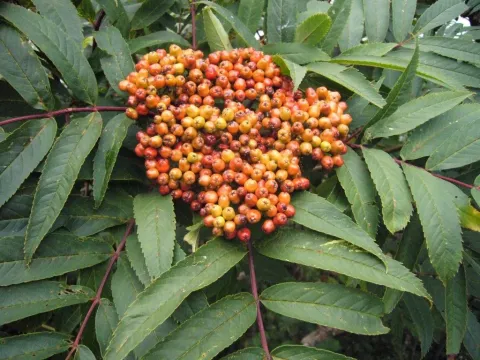
Showy mountain ash
Sorbus decora
Sowing seeds of Sorbus decora is typically carried out in late autumn, ensuring the natural stratification required for a high germination rate. Alternatively, spring sowing is possible after pre-chilling the seeds at temperatures between 0–5 degrees Celsius for approximately 3 to 4 months.
What the section contains
Showy mountain ash
For raising seedlings, choose well-lit areas with well-drained soil to prevent moisture stagnation, which is particularly harmful to young root systems. The soil mixture should be enriched with organic fertilizers to provide a healthy start for seedling growth during the first year of cultivation.
The optimal planting depth for seeds is 1-2 centimeters, and it is recommended to mulch the seedbeds to prevent the topsoil from drying out. In nursery conditions, row spacing should be at least 30-40 centimeters to facilitate maintenance and future transplantation.
When using vegetative propagation, such as cuttings or grafting, the optimal time is late spring before active sap flow begins. This timing allows the cuttings to establish successfully and develop a robust root system before the onset of summer heat.
An essential step is preparing planting pits in advance, ideally 2-3 weeks before transplanting seedlings to their permanent location. The pit size should be 20-30% larger than the root ball to provide ample space for root development during the initial adaptation period.
Sorbus decora, belonging to the Rosaceae family, is an extremely cold-hardy species that adapts successfully to harsh climatic conditions in northern regions. It prefers a cool climate where summer temperatures do not reach extreme levels, which could hinder proper fruit development.
The plant is not overly demanding regarding soil type, but it exhibits the best decorative qualities and growth rates in loamy, fertile, and adequately moist soils. The species does not tolerate waterlogged conditions, so on heavy clay sites, the creation of a drainage layer is mandatory.
For the proper development of the canopy, the tree requires an open, sunny location, although it can tolerate light side-shading during the day. Intense sunlight directly affects the brightness of the fruit color and the richness of the leaf coloration during the autumn season.
Standard care includes regular loosening of the soil in the root zone to improve aeration and suppress weed growth that might compete for nutrients. Irrigation is necessary during dry spells, especially in the first few years of the tree's life, to prevent drought stress and premature leaf drop.
Fertilizing should be done twice per season: in spring, focus on nitrogen-based formulas to stimulate vegetative growth, and in late summer, switch to potassium-phosphorus blends to ensure proper wood maturation and winter hardiness. Pruning for sanitation or crown shaping should be done in early spring.
Sorbus decora is primarily valued as an ornamental crop; however, it bears abundant fruit, producing bright red berries arranged in large, striking corymbs. The fruit remains on the branches for a long time after the leaves fall, which increases the species' landscape value.
The yield of the tree varies depending on the specimen's age, lighting conditions, and the regularity of watering during the summer months. Mature trees are capable of producing several dozen kilograms of fruit, which actively attract birds and contribute to local biodiversity.
The culinary use of the fruit is limited due to its specific flavor profile, though it is often used as a decorative element in arrangements or as an ingredient in vitamin-rich supplements. Productivity can be improved by proper crown management, which prevents branch overcrowding.
Regular pruning promotes better light penetration into the center of the crown, which stimulates fruit production and increases the number of flowers. With proper care, the tree is capable of bearing fruit annually, making it a reliable element of garden and park landscaping.
If harvesting for culinary use, it is best done after the first frosts, which reduce bitterness and make the berries more suitable for processing. It is important to harvest carefully to avoid damaging the next year's fruit buds located near the clusters.
Like most members of the Rosaceae family, Sorbus decora is susceptible to pests common to fruit trees. Aphids, mites, and codling moths are the most frequent visitors, potentially damaging young foliage and reducing the crown's visual appeal.
Among fungal diseases, scab is the most significant threat, manifesting as spots on leaves and fruit, which degrades the tree's appearance. Rust infections are also possible when air humidity is high, especially in close proximity to intermediate hosts of the pathogen, such as junipers.
To control pests, it is recommended to apply preventative insecticide sprays in early spring when insects become active. Biological control methods, such as encouraging natural predators into the garden, have also proven effective.
Fire blight can affect mountain ash, causing young shoots to wilt and leaves to turn black, which requires the immediate removal and burning of affected plant parts. Strict phytosanitary control and tool disinfection after each pruning procedure help reduce the risk of infection spread.
- Regular tree inspection for spots or leaf deformation.
- Timely sanitary pruning of dead or damaged branches.
- Applying mulch to prevent the spread of pathogen spores from the soil.
- Using high-quality planting material resistant to local diseases.
Harvesting the fruit of the ornamental mountain ash is generally not a priority for most gardeners, as the tree is more frequently used for landscape decoration. However, when gathering fruit is necessary, work is done by hand, cutting off the entire clusters to preserve branch integrity.
The optimal time for harvesting is during the technical maturity phase, when the fruit achieves a vibrant, saturated red color. Harvesting too early prevents the berries from reaching the necessary concentration of sugars and bioactive compounds characteristic of this species.
After harvesting, it is recommended to sort the fruit, removing any damaged or immature berries to ensure the quality of the bulk harvest. For long-term storage, the berries can be dried in the shade with good ventilation or frozen, which preserves their nutritional composition.
It is important to remember that by leaving a portion of the harvest on the tree, the gardener provides a food source for wintering birds, which is a vital ecological factor during the winter months. Thus, harvesting is selective, keeping some berries as a natural decorative feature.
When stored fresh in a cool room, mountain ash berries can retain their properties for several weeks. Using wooden containers or wicker baskets is preferable, as they provide the necessary airflow, preventing rot and decay processes.