
Shining cinquefoil
Potentilla nitida
Description
Growing requirements
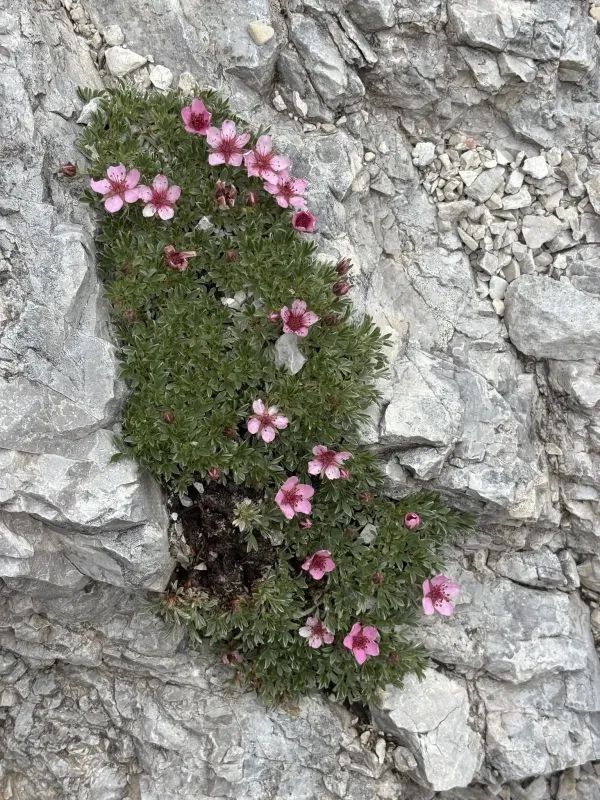
The shining cinquefoil (Potentilla nitida) is a perennial herbaceous plant belonging to the Rosaceae family. It is natively found in the high-altitude alpine regions and the Dolomites, thriving on rocky crevices and limestone cliffs.
Botanically, it forms small, dense mats or cushions. The plant's standout feature is its trifoliate, silvery-hairy leaves, which produce a distinct metallic sheen, giving the species its common and scientific names.
Cultivating Potentilla nitida successfully requires mimicking its natural habitat. It demands exceptionally sharp drainage, full sun exposure, and a gritty, alkaline substrate. Stagnant water is detrimental, often leading to rapid root rot in standard garden soil.
The plant is perfectly adapted to harsh alpine conditions, showing remarkable cold hardiness. However, it requires protection from excessive winter moisture, which can cause the cushion to decay if the drainage layer is insufficient.
In terms of usage, it is exclusively an ornamental crop for specialized rock gardens, alpine troughs, and xeriscapes. Gardeners prize it for its tidy, low-growing habit and beautiful, typically pink or white flowers that emerge in early to mid-summer.
Main diseases and pests
The primary threats to Potentilla nitida are fungal diseases associated with high humidity and stagnant air. Powdery mildew and various forms of crown rot are common if the plants are situated in areas with poor ventilation or heavy soil.
Pests such as spider mites can occasionally affect the plants, particularly in hot, dry environments. Monitoring the foliage during the growing season is essential for early detection and mitigation through appropriate horticultural treatments.
To prevent disease, it is recommended to top-dress the area around the plant with fine gravel or grit. This keeps the foliage from coming into direct contact with the soil, reducing the risk of rot and fungal proliferation significantly.
Careful weed management is vital for the health of this slow-growing alpine. Competition from fast-growing weeds can quickly overwhelm a Potentilla nitida cushion, leading to nutrient deprivation and increased susceptibility to pests.
Given the right rock garden environment and proper maintenance, this plant is remarkably resilient. It is a long-lived species that adds significant aesthetic value to specialized landscapes for many years without requiring extensive interventions.