
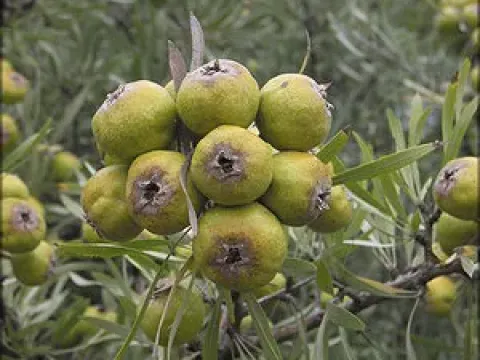
Sharp-toothed pear
Pyrus oxyprion
The sharp-toothed pear (Pyrus oxyprion) is a species belonging to the Rosaceae family. It is a wild pear relative known for its resilience and adaptability to rugged terrains, making it a valuable subject for agricultural research and rootstock development.
What the section contains
Sharp-toothed pear
The species originates from the mountainous regions of Western Asia, particularly throughout the Caucasus and adjacent areas. It thrives on rocky slopes and within deciduous forest edges, showing a high degree of survival capability in diverse environments.
Botanically, it is identified by its distinctively sharp, serrated leaf margins, which distinguish it from other related wild pear species. The tree possesses a robust, deep-reaching root system that allows it to thrive in conditions with fluctuating moisture levels.
Soil requirements for this plant favor well-drained, fertile loamy soils. While it is quite tolerant of poorer soil conditions, it performs best when the substrate allows for effective drainage, preventing stagnant water that could lead to root stress.
Climate preferences for Pyrus oxyprion include exposure to moderate sunlight and high tolerance for temperature fluctuations. It is well-suited for temperate climates, requiring sufficient solar energy during the growing season to ensure proper wood maturation.
The primary agricultural use of the sharp-toothed pear is its role as a hardy rootstock for commercial pear varieties. Its genetic vigor and graft compatibility make it an excellent choice for stabilizing grafted orchards.
The fruits are generally smaller and often have a tart flavor profile, making them more suitable for processing rather than fresh consumption. They are commonly used in the production of preserves, dried fruit, and artisanal beverages.
Productivity levels vary significantly based on the environment and the individual tree's age. Pruning and canopy management are essential practices in cultivation to optimize fruit size and stimulate consistent annual yields.
Cross-pollination is a key factor in ensuring a reliable harvest. It is recommended to maintain a mix of compatible individuals in the orchard to encourage successful fruit set and improve overall yield stability.
Selective breeding programs aim to improve the fruit quality of Pyrus oxyprion while maintaining its natural resistance to environmental stress, potentially expanding its role in modern fruit production.
Common fungal diseases that threaten the health of the sharp-toothed pear include scab and blossom blight. These pathogens can significantly affect leaf vitality and fruit quality, particularly in wet and humid conditions.
Key insect pests include the codling moth and various pear psyllids. Effective management requires integrated pest management (IPM) strategies to reduce insect populations while protecting beneficial organisms within the orchard ecosystem.
Pruning is not only for shaping the tree but also serves as a crucial sanitary measure. Removing diseased branches helps reduce the inoculum load and prevents the spread of pathogens throughout the orchard during the next season.
Regular scouting for early signs of infection or infestation is necessary to allow for timely interventions. By acting quickly, orchard managers can minimize the need for heavy chemical applications.
Healthy horticultural practices, such as proper sanitation, spacing to improve airflow, and balanced fertilization, remain the most effective ways to bolster the natural defenses of Pyrus oxyprion against threats.