
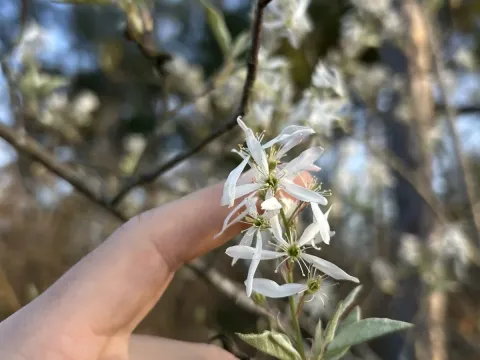
Serviceberry
Amelanchier
Serviceberries are typically propagated through vegetative methods, such as root suckers, division, or softwood cuttings, which allow for faster establishment of fruit-bearing plants. While seeds can be used for propagation, they require cold stratification to break dormancy.
What the section contains
 Amelanchier amabilis
Amelanchier amabilis
Amelanchier amabilis
 Amelanchier hybrids
Amelanchier hybrids
Amelanchier hybrids
 Amelanchier spicata
Amelanchier spicata
Amelanchier spicata
 Apple serviceberry
Amelanchier grandiflora
Apple serviceberry
Amelanchier grandiflora
 Asian serviceberry
Amelanchier asiatica
Asian serviceberry
Amelanchier asiatica
 Bartram's shadbush
Amelanchier bartramiana
Bartram's shadbush
Amelanchier bartramiana
 Basalt serviceberry
Amelanchier basalticola
Basalt serviceberry
Amelanchier basalticola
 Coastal serviceberry
Amelanchier obovalis
Coastal serviceberry
Amelanchier obovalis
 Fernald's serviceberry
Amelanchier fernaldii
Fernald's serviceberry
Amelanchier fernaldii
 Gaspé serviceberry
Amelanchier gaspensis
Gaspé serviceberry
Amelanchier gaspensis
 Inland serviceberry
Amelanchier interior
Inland serviceberry
Amelanchier interior
 Low shadbush
Amelanchier humilis
Neglected shadbush
Amelanchier neglecta
Low shadbush
Amelanchier humilis
Neglected shadbush
Amelanchier neglecta
 Pale serviceberry
Amelanchier pallida
Pale serviceberry
Amelanchier pallida
 Roundleaf serviceberry
Amelanchier sanguinea
Roundleaf serviceberry
Amelanchier sanguinea
 Running serviceberry
Amelanchier stolonifera
Running serviceberry
Amelanchier stolonifera
 Serviceberry
Amelanchier arborea
Serviceberry
Amelanchier arborea
 Utah serviceberry
Amelanchier utahensis
Utah serviceberry
Amelanchier utahensis
Serviceberry
The ideal time for transplanting nursery-grown shrubs is in early spring or late autumn when the plant is dormant. Providing a well-prepared planting hole with organic amendments ensures strong root development in the initial growth phase.
Belonging to the Rosaceae family, this species consists of deciduous shrubs or small trees that can reach significant heights. Serviceberry is known for its vigor and ability to adapt to various environmental conditions across the Northern Hemisphere.
Native primarily to North America, the genus Amelanchier has been introduced globally for its aesthetic value and delicious fruit. It is highly valued for its cold hardiness, making it an excellent choice for northern climates.
This species is moderately light-demanding; while it tolerates partial shade, full sun exposure is necessary to maximize fruit production and maintain the plant's health and compact structure.
Serviceberries are highly adaptable to various soil types, provided there is adequate drainage. They perform best in fertile, loamy soils with a slightly acidic to neutral pH, avoiding waterlogged sites that may lead to root rot.
Although the plant is drought-tolerant once established, regular irrigation during the fruit-ripening stage significantly increases yields and quality. Its deep root system helps it survive dry spells that might affect other berry crops.
Routine pruning is essential for long-term health, focusing on the removal of dead or crossing branches in late winter. Proper canopy management allows for better air circulation, which helps reduce the risk of common fungal diseases.
Occasional fertilization with balanced nutrients in early spring promotes vigorous growth and heavy blooming. However, excessive nitrogen should be avoided to prevent weak wood formation and excessive vegetative growth.
Mulching the root zone with wood chips or organic compost is beneficial for moisture retention and weed suppression, creating a stable environment for the shallow surface roots to thrive.
A mature serviceberry shrub can produce between 5 and 10 kilograms of fruit depending on the cultivar and level of care. Productive harvest usually begins 3 to 4 years after the initial planting of the saplings.
The fruit is a small, pomaceous berry with a sweet, nutty flavor that is highly prized for its nutritional value. The berries are rich in antioxidants, vitamins, and pectin, making them a "superfood" in many regions.
Serviceberries are incredibly versatile, used in everything from fresh eating to baking, jams, preserves, and wine production. Their unique flavor profile allows them to serve as a high-value product for specialty markets.
Beyond culinary use, the plant is widely used in landscape design for its spectacular white spring flowers and brilliant fall foliage. It is a dual-purpose species that provides both edible harvest and garden beauty.
Current breeding efforts focus on selecting cultivars that produce larger fruits and allow for more synchronized ripening, which would further enhance the economic viability of serviceberry production.
While generally robust, serviceberries can be susceptible to fungal infections like fire blight or monilinia, which cause wilting of blossoms and fruit rot. Regular inspection and prompt removal of infected wood are crucial.
Leaf spots caused by various pathogens can occur during humid summers, leading to premature defoliation. Good sanitation, such as clearing away fallen leaves, helps decrease the spore load in the orchard.
Pests like aphids and leafrollers may feed on young foliage and blossoms. Integrated pest management strategies, such as attracting beneficial insects, are usually sufficient to keep these populations under control without chemical intervention.
Bird predation is perhaps the most significant challenge for growers, as the berries are highly attractive to local avian populations. Protective netting is often necessary to ensure a harvest remains for the grower.
Maintaining proper tree health through good aeration and sanitation is the most effective way to prevent outbreaks of diseases and pests, ensuring a productive and long-lived orchard.
Harvesting should take place when berries turn deep purple or black and develop a waxy sheen. Because the berries ripen over a period of time, it is common to pick them in multiple passes every few days.
The fruit has a thin skin and can bruise easily, requiring gentle handling during harvest. Using shallow baskets or containers prevents the berries at the bottom from being crushed under their own weight.
Freshly picked serviceberries do not have a long shelf life and should be consumed or processed immediately. If processing is delayed, the fruit should be stored in a cool place or frozen to preserve its flavor and nutrients.
Drying is an excellent method for long-term preservation, and dried serviceberries (often called "juneberries") are a popular traditional snack or ingredient in granola and baked goods.
For large-scale operations, mechanical harvesting is a goal; however, because the berries do not ripen simultaneously, growers often prefer smaller, manual operations to ensure that only the highest quality berries are selected.