
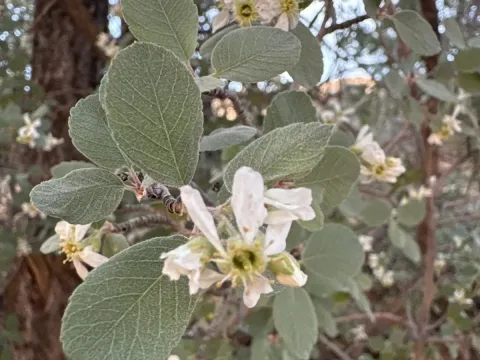
Serviceberry
Amelanchier Medik.
Serviceberry (Amelanchier Medik.) is a deciduous shrub or small tree belonging to the Rosaceae family. It is typically propagated vegetatively through root suckers, cuttings, or division of the root system, which ensures that offspring maintain the desirable characteristics of the parent plant.
What the section contains


Serviceberry
Propagation by seeds is primarily used for breeding purposes. Seeds require a long period of cold stratification to break dormancy. Sowing usually occurs in late autumn, allowing the natural winter cycle to trigger germination in the following spring.
When planting nursery-grown saplings, early spring or late autumn is recommended. The planting site should be prepared with well-draining, nutrient-rich soil to establish a robust root system before the onset of the growing season or harsh winters.
Spacing requirements vary depending on the intended use. For hedgerows, a distance of 1 to 1.5 meters between plants is sufficient. For fruit-bearing orchards, spacing should be increased to 3 or 4 meters to ensure proper crown development and light penetration.
Young plants require consistent monitoring during their first years to ensure they are adequately watered and weed-free. Once established, Serviceberry is exceptionally resilient and requires minimal intervention to maintain its health and vigor.
Serviceberry is highly adaptable to various soil types, including sandy loams, clays, and slightly rocky ground. It prefers neutral to slightly acidic soil conditions and requires a location that does not suffer from waterlogging or persistent swampy conditions.
Renowned for its extreme cold hardiness, this species thrives in temperate climates, with many varieties capable of surviving temperatures as low as -40 degrees Celsius. This makes it an ideal candidate for northern orchards and landscaping.
Full sun is essential for optimal flower and fruit production. While Serviceberry can tolerate partial shade, its growth becomes leggy, and fruit yield is significantly reduced in low-light conditions compared to trees situated in open, sunny environments.
While mature trees exhibit significant drought tolerance, supplementary watering during prolonged dry spells in the summer is beneficial, especially during the fruit-ripening stage, to prevent premature fruit drop and ensure juicy, well-developed berries.
Regular pruning is a vital part of the maintenance cycle. Removing dead or crossing branches promotes airflow and light access to the center of the crown, which improves overall plant health and prevents the accumulation of moisture and fungal spores.
The Serviceberry begins producing fruit at a young age, typically yielding the first small harvests within 3 to 4 years. Mature production, where the tree reaches its maximum potential, generally begins around age 6 to 8.
A single mature shrub can produce between 5 and 10 kilograms of fruit per season. The berries ripen in clusters, and due to their staggered ripening period, growers often perform multiple harvests over several weeks to capture the fruit at peak sweetness.
The berries are highly nutritious, containing significant levels of antioxidants, vitamins, and minerals. They are highly prized in culinary applications for making jams, jellies, juices, and various baked goods, offering a flavor profile often described as a mix between apple and almond.
Beyond human consumption, the plant is valued for its ecological contribution. It serves as an excellent nectar source for pollinators in the early spring and provides essential forage for birds, making it a cornerstone plant for wildlife-friendly gardens.
The reliability of the annual yield is a significant advantage, as the late-blooming flowers are far more resistant to spring frost than those of cherries or plums, ensuring a consistent harvest regardless of typical springtime temperature fluctuations.
Serviceberry is generally robust, but it can be susceptible to common Rosaceae diseases like rust (Gymnosporangium spp.) and powdery mildew, particularly in humid or stagnant air conditions. Proper crown management is the best preventive measure.
Insect pests such as leafrollers and aphids can occasionally cause localized damage to foliage. Integrated pest management, which includes monitoring and the use of targeted biological controls, is usually sufficient to maintain a healthy tree without heavy pesticide use.
Birds are the most significant threat to the fruit harvest. Because they are attracted to the berries as soon as they turn color, growers often use physical exclusion methods such as bird netting to protect the yield during the ripening season.
Sanitation practices, such as removing and destroying fallen infected leaves or pruning out dead wood, are crucial for limiting the spread of fungal pathogens within the garden environment.
Over-fertilization with high-nitrogen products should be avoided, as it encourages excessive, tender vegetative growth that is more prone to aphid attacks and winter injury, disrupting the tree’s natural growth rhythm.
Harvesting Serviceberry requires a gentle touch because the berries are thin-skinned and highly perishable. They should be picked carefully, ideally by clipping the entire cluster, to avoid crushing individual fruits.
The best time for harvesting is during dry, cool morning hours after the dew has evaporated. Berries harvested when wet tend to bruise and spoil rapidly, significantly reducing their shelf life and quality for processing.
Fresh berries have a very limited shelf life of approximately 24 to 48 hours under ambient conditions. If immediate processing is not possible, they should be refrigerated at 2–4 degrees Celsius to delay decay.
Freezing is the most effective way to store the harvest for long-term use. Frozen berries retain their flavor and nutritional profile well, making them perfect for winter smoothies, preserves, or baking projects.
Drying is another traditional preservation method. Dried Serviceberries concentrate the natural sugars and nutrients, providing a shelf-stable, convenient, and healthy snack that can be stored for months in a cool, dark pantry.