
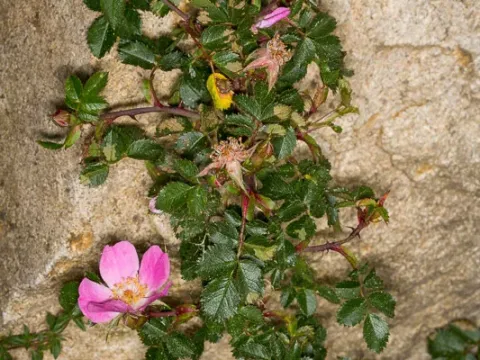
Serafini rose
Rosa serafinii
The Serafini rose (Rosa serafinii) is a deciduous shrub belonging to the Rosaceae family. This species is recognized for its compact growth habit and its resilient nature, making it a valuable subject for ecological and ornamental plantings.
What the section contains
Serafini rose
Native to the Mediterranean region, specifically in mountain areas of Sardinia and Corsica, this species has adapted to limestone-rich soils and rocky terrain. It thrives in environments where sun exposure is maximized and soil drainage is excellent.
The plant is characterized by its small, finely serrated leaflets, often showing subtle pubescence. Its flowers are typically pink and solitary, appearing on short, thorny stems that create a dense, bushy appearance suitable for naturalistic landscape designs.
To cultivate the species successfully, provide a position in full sun. While it is hardy and drought-tolerant once established, it requires well-drained, slightly alkaline soil to prevent root rot and other physiological issues related to waterlogging.
Maintenance is straightforward, involving periodic pruning to encourage denser foliage and flowering. Its хозяйственное (horticultural) value lies in its role as a low-maintenance hedge or as a hardy element in a rock garden setting.
Serafini rose is prone to common fungal pathogens such as powdery mildew, especially if air circulation is poor or humidity levels fluctuate significantly during the spring and summer growth cycles.
Insect pests including aphids and rose leafhoppers may target the soft new growth. Monitoring for infestations early in the season is essential, and manual removal or horticultural soaps are often sufficient to manage these common garden pests effectively.