
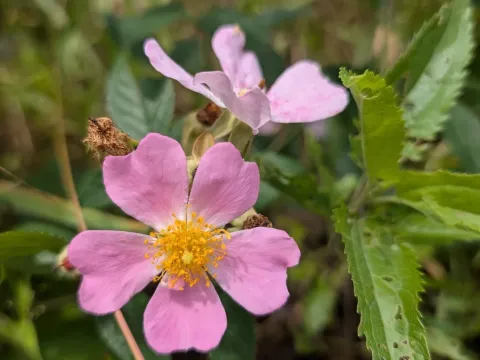
Prairie rose
Rosa setigera
Planting of the Prairie rose (Rosa setigera) is best performed in early spring or mid-autumn, allowing the roots to establish before extreme temperature fluctuations occur.
What the section contains
Prairie rose
Propagation is typically achieved through softwood cuttings taken in early summer or by sowing seeds that require stratification to break dormancy.
When planting, provide sufficient space between specimens, as this climbing or arching shrub has a vigorous growth habit and can spread several meters.
Select a location with well-prepared soil, incorporating organic compost to improve structure and provide essential nutrients for initial development.
Initial irrigation is crucial to settle the soil around the root system and ensure proper contact, preventing air pockets that might impede growth.
Rosa setigera thrives in well-drained, fertile soil and is highly adaptable, though it performs best in slightly acidic to neutral soil environments.
This species is renowned for its exceptional winter hardiness, making it an excellent choice for regions with challenging weather conditions.
Adequate sunlight exposure is necessary to promote robust flowering; however, the plant can tolerate partial shade if the morning light is sufficient.
Regular maintenance involves keeping the base of the plant clear of competing weeds, which ensures that moisture and nutrients remain available to the rose.
Periodic pruning is required to maintain the shape of the shrub and encourage new, healthy growth that will produce the most abundant blossoms.
The primary diseases affecting this species include powdery mildew and black spot, which often thrive in dense foliage with poor air circulation.
Pests such as aphids and spider mites can infest the leaves and stems, requiring timely intervention to prevent damage to the plant's aesthetic and vitality.
Integrated pest management, including the use of horticultural oils or organic soaps, is recommended as a first line of defense against common rose pests.
Maintaining a clean garden environment by removing fallen leaves in autumn is essential to eliminate overwintering sites for fungal spores.
Proper spacing during planting remains the most effective long-term strategy for preventing moisture-related diseases by allowing wind to pass through the canes.
Seeds are harvested from the red hips once they have fully ripened in late autumn, ensuring the seed coat is sufficiently mature for future germination.
Flowers intended for cut arrangements should be harvested in the early morning while the buds are still semi-closed to ensure maximum vase life.
Petals collected for culinary use or potpourri should be gathered immediately after the morning dew has dried to prevent spoilage.
When gathering material, always use sharp, sterilized shears to make clean cuts, which minimizes tissue damage and prevents potential infection points.
The collection of hips provides not only seed stock but also contributes to the visual appeal of the garden during the transition into winter months.