
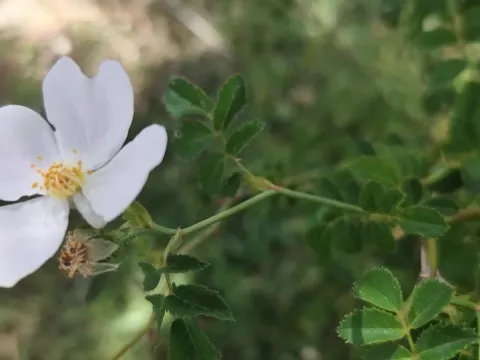
Pouzin's rose
Rosa pouzinii
Pouzin's rose (Rosa pouzinii) is a perennial deciduous shrub belonging to the Rosaceae family. This species is native to the Mediterranean basin, stretching from the Iberian Peninsula through various parts of Southern Europe to North Africa.
What the section contains
Pouzin's rose
The plant thrives in full sun and requires well-drained soil. It is particularly noted for its ability to grow in rocky, limestone-rich substrates where other ornamental plants might struggle to establish their root systems.
Regarding climatic needs, this species is well-adapted to Mediterranean climates characterized by mild, wet winters and warm, dry summers. Its physiological makeup allows it to maintain health during extended periods of drought.
Botanical traits include thin, glabrous or slightly pubescent branches armed with recurved thorns. The leaves are typically imparipinnate, consisting of 5-7 leaflets that provide a fine texture to the foliage throughout the growing season.
The flowering period usually occurs in late spring. The flowers are simple, typically five-petaled, and exhibit soft pink hues. These blossoms are highly attractive to bees and other pollinators, making the species an excellent candidate for ecological gardens.
Common health issues for this species include fungal infections such as powdery mildew and black spot. These problems are often exacerbated by poor air circulation and high humidity levels during the spring season.
Pests that commonly target this rose include aphids, spider mites, and leaf-rolling insects. Maintaining plant vigor through proper site selection and sanitation is the primary strategy for managing these potential threats effectively.