
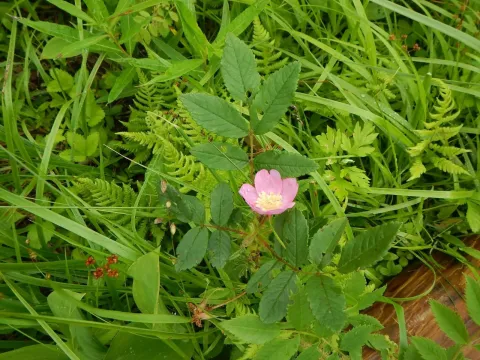
Prickly rose
Rosa nipponensis
Propagation of the Prickly rose (Rosa acicularis) is most commonly achieved through seeds, which require mandatory stratification at temperatures between 0 and +5°C for 4–6 months. The optimal time for sowing seeds in the ground is autumn, immediately after harvesting, allowing seeds to undergo their natural preparation cycle.
What the section contains
Prickly rose
For vegetative propagation, root suckers are used, which are separated from the mother plant during the dormant period—early spring before sap flow begins or in autumn after leaf fall. This method allows for faster production of fruit-bearing specimens compared to seed propagation.
Softwood cuttings are taken in June–July using rooting stimulants to ensure success. Planting the rooted cuttings into their permanent location is done in the second year of growth, ensuring enough spacing for the shrub to expand properly as it matures.
The planting scheme for seedlings depends on the intended purpose of the culture. For vitamin-rich plantations or living fences, it is recommended to maintain a distance of 1.5–2 meters between plants, which ensures light access to every branch and facilitates mechanized maintenance.
Planting pits are prepared in advance, enriching the soil with organic fertilizers such as humus or compost, combined with wood ash. It is crucial to ensure that the root collar is buried 3–5 cm deep during planting to stimulate the growth of adventitious roots.
The Prickly rose belongs to the Rosaceae family and is an exceptionally winter-hardy species capable of enduring the harsh climatic conditions typical of northern regions and forest zones. It is undemanding regarding temperature fluctuations and thrives in temperate climates.
The crop prefers well-lit areas, as shade significantly reduces the intensity of flowering and fruit set. While the plant can tolerate slight lateral shading, it shows maximum productivity when grown in open, sunny locations.
The Prickly rose is not overly demanding regarding soil conditions, but it prefers fertile, loose loams with a neutral or slightly acidic reaction. It is important to avoid areas with stagnant moisture, as the root system is sensitive to waterlogging.
Good agricultural practices include regular loosening of the near-trunk circle and mulching the soil surface to conserve moisture and suppress weed growth. During dry periods, the crop requires irrigation, especially during the flowering and active fruit-forming phases.
Pruning is a critical element of maintenance. It is aimed at removing old, unproductive branches older than 5–7 years, as well as thinning the bush to ensure air circulation within the crown, which helps prevent the development of fungal diseases.
The productivity of the Prickly rose depends directly on the level of agronomy and the age of the bush. Initial fruits on seedlings typically appear in the 3rd to 4th year after planting, though full commercial productivity is usually reached between 6 and 8 years of age.
With proper care, a single mature bush can yield between 1.5 and 3 kg of fruit per season. These fruits are noted for their high ascorbic acid content, making this species a valuable raw material for the pharmaceutical and food processing industries.
Regular application of mineral fertilizers containing nitrogen, phosphorus, and potassium during the budding phase significantly increases yields. Phosphorus-potassium fertilization in autumn helps the plant prepare for winter and set more fruit buds for the following year.
To optimize harvesting, plantations are often formed in rows, allowing for the use of small machinery for maintenance. Planting density and timely rejuvenation pruning are key factors in maintaining stable yields over a period of 15–20 years.
It must be noted that overloading the bush with fruit can lead to smaller fruit sizes. Therefore, to achieve high-quality produce, producers may perform thinning of the fruit load by removing weak shoots and some of the ovaries when necessary.
The most common disease is powdery mildew, which manifests as a white coating on the leaves and young shoots. To combat this, copper or sulfur-based fungicides are used, along with biological agents at the first sign of infection.
Rust of the leaves also poses a serious threat, causing premature leaf fall and reducing the winter hardiness of the shrub. Affected leaves should be collected and disposed of to prevent the spread of infection to the next season.
Among pests, the rose aphid, which sucks juices from young leaves, and the rose sawfly, whose larvae can damage plant tissues, cause the most harm. Regular bush inspections and timely treatment with systemic insecticides are effective measures.
Spider mites can multiply in hot, dry weather, leading to the deformation and drying of leaf blades. Regular watering of the crown with water helps reduce the pest population and increases the humidity around the bush.
Disease prevention consists of maintaining high agricultural standards: timely thinning of the crown, cleaning up fallen leaves in the autumn, and ensuring an adequate level of nutrition to strengthen the plant's natural immune system.
Harvesting of Prickly rose fruits begins in the phase of full ripeness, when they acquire a bright red or orange-red color and become firm. Depending on the region, this period usually falls between late August and September.
It is important to harvest in dry weather, as wet fruits spoil quickly during storage and transportation. It is recommended to pick fruits along with their stalks, which helps preserve their integrity and prevents juice leakage.
The harvested yield must be processed within the first 24–48 hours after picking or laid out to dry. Drying is conducted at temperatures between 50 and 60°C in specialized drying cabinets until the fruits become brittle, ensuring the preservation of vitamins.
Protective gloves are recommended for manual harvesting, given the sharp thorns on the branches. Mechanized harvesting is possible if using specialized harvesters, which is justified when cultivating the crop on large areas.
After harvest, fruits are sorted to remove damaged items and impurities, after which they are sent for processing (manufacturing vitamin syrups, teas, or extracts) or stored in a dry, ventilated room at low temperatures.