
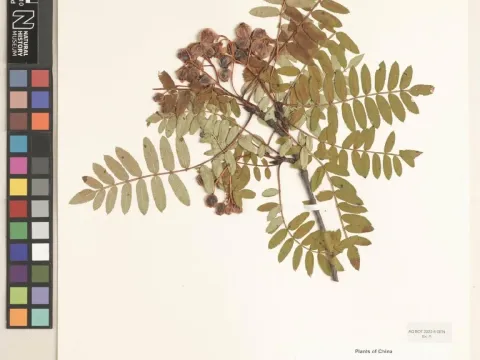
Pratt's mountain ash
Sorbus prattii
Pratt's mountain ash (Sorbus prattii) is a deciduous shrub species belonging to the Rosaceae family, native to Western China. It is highly valued for its elegant, feathery foliage and its unique, pearl-white berries.
What the section contains
Pratt's mountain ash
The plant thrives in temperate climates and prefers sunny locations to ensure proper fruit development. It is quite hardy and can adapt to various environmental conditions typical of mountainous regions.
Well-drained soil is a primary requirement for this shrub, as it dislikes waterlogged conditions. It prefers slightly acidic to neutral soil pH, which should be kept moist but not saturated during the growing season.
Maintenance involves regular watering during establishment and subsequent dry spells. Pruning should be kept to a minimum, focusing mainly on removing dead or crossing branches to maintain the plant's natural shape.
In ornamental horticulture, this species is used for its year-round appeal. The autumn display, when the white fruits stand out against the changing leaf colors, makes it a premium choice for diverse garden designs.
Pratt's mountain ash is generally robust, but it can be susceptible to common Rosaceae diseases like leaf spot and apple scab. Maintaining good air circulation is the best way to prevent fungal infections.
Rust diseases might appear if the surrounding environment is consistently humid. Applying fungicides during the early spring growth period can help in managing these potential health issues effectively.
Aphids are the most common insect pests encountered on this plant. They tend to congregate on the tender new growth, which can cause leaf curling if left untreated for long periods of time.
Scale insects can occasionally affect the branches, requiring targeted horticultural oil treatments during the dormant season. Routine inspection of the plant's structure is recommended for early detection.
Integrated pest management, combining cultural practices like removing infected debris with targeted chemical control when necessary, ensures the longevity and beauty of the shrub in a garden setting.