
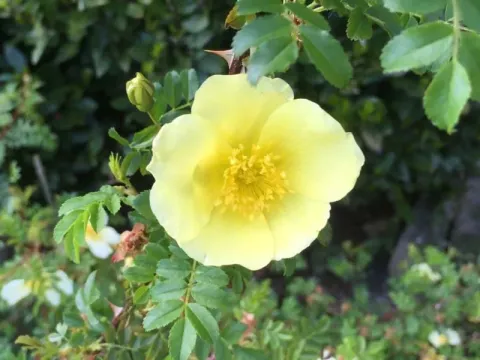
Primrose rose
Rosa primula
The Primrose rose (Rosa primula) belongs to the Rosaceae family and is a distinctive shrub known for its early blooming period. Propagation is primarily achieved through cuttings or root division to maintain the desired variety characteristics.
What the section contains
Primrose rose
When selecting a planting site, it is crucial to ensure adequate drainage to prevent root rot. Digging a generous planting hole and incorporating organic matter ensures optimal establishment of the shrub.
Spring planting is highly recommended to give the root system enough time to establish before the onset of extreme summer heat or winter cold, depending on the climatic zone.
Spacing is a vital component of cultivation; Rosa primula develops a sprawling habit and requires sufficient space to allow air circulation, which is key to preventing moisture-related problems.
After initial planting, a deep watering cycle followed by mulch application helps keep the soil moisture levels consistent and provides an insulating layer against temperature fluctuations.
This species thrives in full sun, which is essential for maximizing both flower production and the aromatic qualities of the foliage, for which the Primrose rose is particularly famous.
Soil conditions should ideally be neutral or slightly acidic with excellent structure. Sandy loam soils are preferred as they allow for rapid root penetration and efficient nutrient uptake.
Regular fertilization is required throughout the growing season to support continuous bloom cycles. A balanced approach with added phosphorus is often used to promote strong root and flower development.
Watering frequency should be adjusted based on local weather conditions, prioritizing deep irrigation at the base of the plant to encourage deep root growth rather than shallow watering.
Rosa primula is known for its hardiness, making it a reliable choice for temperate landscapes where it can withstand fluctuating temperatures and harsh winters with minimal human intervention.
Aphids are the most common pest, often clustering on new growth and flower buds. Early detection is essential to prevent these insects from weakening the plant during its active growth phase.
Powdery mildew can become an issue if the foliage remains damp and the air circulation around the shrub is restricted. Proper pruning practices are the best defense against fungal outbreaks.
Black spot can also occur in humid climates. Maintaining a clean garden environment by removing fallen leaves and debris helps reduce the spread of spores and minimizes disease pressure.
- Regular inspection for aphid infestations
- Sanitary pruning to increase light and airflow
- Application of dormant sprays in late winter
- Monitoring soil moisture to avoid waterlogging