
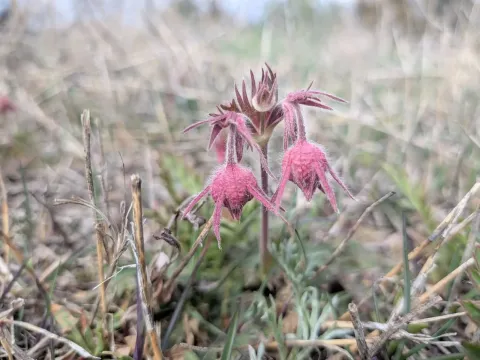
Prairie smoke
Geum triflorum
Prairie smoke (Geum triflorum) is a perennial herbaceous plant belonging to the Rose family (Rosaceae). It is native to North America, where it thrives in open meadows, prairies, and rocky slopes.
What the section contains
Prairie smoke
The plant is highly hardy and adapted to a wide range of climatic conditions, making it an excellent choice for temperate gardens. It prefers full sun exposure, which ensures compact growth and abundant flowering throughout the spring season.
In terms of soil, this plant requires well-drained substrates. While it can adapt to various soil types, it performs best in gritty or sandy loams that prevent root saturation during wet periods. Excessive moisture retention is detrimental to the plant.
Botanically, it is recognized by its nodding, bell-shaped flowers followed by unique, feathery, plume-like seed heads. These plumes give the plant its common name and remain decorative for several weeks, providing long-lasting visual interest.
Cultural practices involve minimal intervention. Maintaining weed-free zones around the plants and providing supplementary watering during prolonged summer droughts are usually sufficient to keep the crop healthy and productive in a landscape setting.
Geum triflorum is generally resilient but may encounter specific health issues if environmental conditions are not properly maintained for its specific requirements.
Fungal issues, particularly root rot, are the most frequent threat, usually resulting from heavy soils and excessive irrigation. Ensuring proper drainage is the primary defense against such pathogens.
Insects like aphids may occasionally infest young flower buds or leaf tissue. While the impact is often cosmetic, severe infestations might require biological control or targeted horticultural treatments.
Preventative measures include avoiding overhead watering to keep foliage dry and ensuring adequate spacing between plants to allow for airflow, which reduces the risk of fungal outbreaks.
Regular monitoring of the site during the early growing season is critical to catch any potential pest problems or disease symptoms before they cause significant damage to the plant population.