
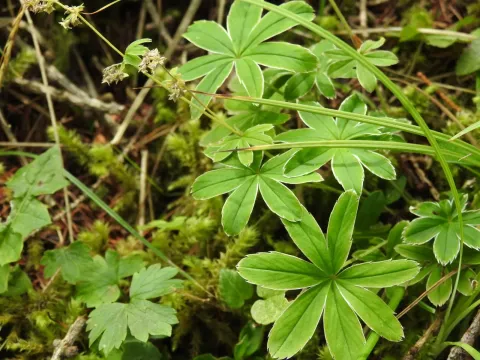
Pale lady's mantle
Alchemilla pallens
Pale lady's mantle (Alchemilla pallens) belongs to the Rosaceae family. It is a perennial herbaceous plant native to the mountainous regions and subalpine meadows of Eurasia. The plant has evolved to thrive in rocky environments with fluctuating temperatures.
What the section contains
Pale lady's mantle
Botanically, the species is identified by its basal rosettes of rounded, palmate-lobed leaves covered in fine, pale-colored hairs. The inflorescences consist of dense clusters of small, yellowish-green flowers held on stems that typically rise above the foliage.
The crop requires cool and moist conditions to achieve optimal growth. It is highly winter-hardy and requires a period of dormancy during colder months, which is essential for the plant's successful emergence in the following spring season.
Regarding soil preferences, Alchemilla pallens performs best in well-drained, loamy soils that remain moist but are not waterlogged. The presence of organic matter in the soil profile supports the vigorous development of its rhizomatous root system.
The primary agricultural and economic use of this plant includes the extraction of bioactive compounds used in traditional remedies and as an ornamental component in landscape design. Its ability to stabilize soil makes it useful for erosion control in alpine or rock garden settings.
The most common disease affecting the plant is powdery mildew, particularly when plants are grown in overcrowded conditions with restricted airflow. Ensuring proper spacing between individual plants is the most effective cultural method to prevent widespread infection.
Insect pests, including aphids and spider mites, may sporadically infest the foliage during hot and dry spells. Careful monitoring and the application of insecticidal soaps or neem oil are generally sufficient to manage these populations without damaging the plant's delicate aesthetic properties.