
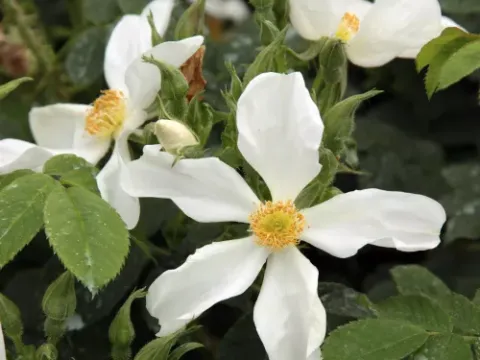
Rosa paulii
Rosa paulii
Rosa paulii is a notable member of the Rosaceae family, widely recognized as a vigorous hybrid resulting from the crossing of Rosa rugosa and Rosa arvensis. It is primarily classified as a sprawling, deciduous shrub with significant ornamental and functional value in horticulture.
What the section contains
Rosa paulii
Botanically, the plant is distinguished by its long, arching stems that exhibit prostrate growth, frequently rooting at nodes when in contact with moist soil. The foliage is matte, textured, and dense, while the flowers appear as large, single, white blooms with prominent yellow stamens during the mid-summer period.
The cultural requirements for Rosa paulii are relatively moderate, as it thrives in full sun but maintains good performance in partial shade. It demands well-drained soil types, preferably fertile loams, though it displays a remarkable tolerance for various soil textures including sandy compositions.
Agronomic management involves periodic pruning to maintain shape and encourage dense ground coverage, especially when used in landscape stabilization. Supplemental irrigation is only necessary during extreme drought conditions once the shrub is fully established in its permanent location.
In terms of agricultural and landscape utility, it is highly sought after for covering embankments, creating naturalistic borders, and suppressing weeds in large, low-maintenance areas. Its aggressive growth habit serves as a natural barrier in public parks and botanical gardens.
Despite its inherent hardiness, Rosa paulii remains susceptible to common rose diseases, including powdery mildew and black spot, particularly in environments with high humidity and stagnant air circulation.
Insect pests such as aphids and spider mites are frequent threats, targeting new growth and delicate buds. Early detection is crucial to prevent extensive damage to the foliage and flower development.
Integrated pest management strategies should focus on thinning the canopy to promote airflow and keeping the base of the plant free of decaying organic matter, which can harbor fungal pathogens.
If chemical intervention becomes necessary, targeted fungicides and insecticides should be applied with precision to minimize the impact on beneficial garden insects such as pollinators.
Regular monitoring and balanced fertilization with phosphorus and potassium help bolster the structural integrity and natural defenses of the shrub against common seasonal threats.