
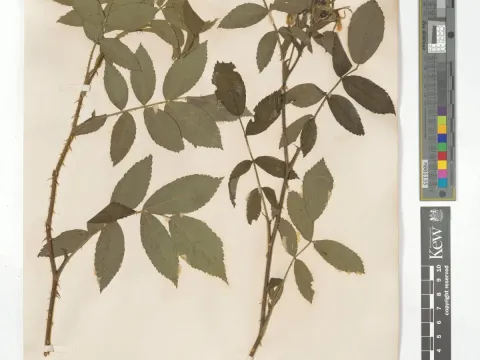
Rosa iwara
Rosa iwara
Rosa iwara is a shrub species belonging to the Rosaceae family, primarily native to coastal regions of Japan. It is known for its remarkable ability to adapt to environments near the sea, where it thrives in sandy, well-draining soils with exposure to sunlight.
What the section contains
Rosa iwara
Botanically, it features arching stems that grow up to two meters in height. The foliage is typically compound and alternate, providing a lush appearance during the growing season. The blossoms, while simple, provide essential nectar for local pollinators.
To cultivate this species successfully, growers must ensure a site with optimal drainage. Rosa iwara does not tolerate waterlogging, as the root system is highly sensitive to hypoxia, which can occur in heavy, compacted clay soils.
Regarding climate, the plant exhibits excellent hardiness but requires a period of winter dormancy to set buds for the following year. Consistent watering during the establishment phase is crucial, although mature plants show moderate drought tolerance.
The horticultural value of Rosa iwara lies in its use for environmental restoration projects, slope stabilization, and as a parent plant in rose breeding programs aimed at improving resistance to salinity and common diseases.
Powdery mildew is the most prevalent fungal threat for Rosa iwara, particularly in regions with high humidity and stagnant air. Infected leaves show a white, flour-like coating that hinders photosynthesis and causes early senescence.
Black spot is another significant issue that can defoliate the shrub if left untreated. This disease is favored by frequent overhead irrigation or consistent rainfall that keeps the foliage damp for extended periods during the summer.
Pests such as aphids are frequently encountered during the spring flush of new growth. These insects colonize the tender tips and buds, potentially causing distortion and stunted development if not managed by natural predators or insecticidal soaps.
The rose sawfly larva can cause considerable damage by skeletonizing the leaves, often going unnoticed until the damage is extensive. Regular monitoring of the foliage underside is recommended to detect larval stages early.
To mitigate these threats, maintain a balanced fertility program and avoid excessive nitrogen, which promotes succulent growth susceptible to pests. Proper pruning techniques to open the center of the canopy are essential for improving airflow and reducing fungal pathogen survival.