
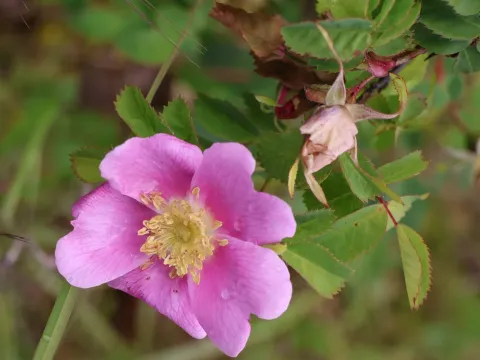
Nootka rose
Rosa nutkana
The Nootka rose (Rosa nutkana) is a member of the Rosaceae family. This perennial deciduous shrub is native to Western North America, primarily found in habitats ranging from Alaska to Northern California, including stream banks, forest edges, and open meadows.
What the section contains
Nootka rose
The species is renowned for its hardiness and ability to thrive in diverse climate zones. It requires well-drained, moderately moist soil to reach its full development potential. While it adapts to various soil types, a slightly acidic to neutral pH is generally considered optimal.
Botanically, the plant features upright canes that can grow up to 3 meters tall, armed with characteristic stout, paired thorns. The leaves are pinnate with 5 to 9 leaflets, and the flowers are large, solitary, and pink, followed by smooth, spherical bright red hips.
Cultivation requires placing the shrub in full sun or partial shade. During the establishment phase, consistent soil moisture is crucial. Maintenance involves pruning older, woody stems every few years to encourage new growth and maintain the health and vigor of the bush.
The Nootka rose is extensively used in landscaping for erosion control, hedges, and wildlife habitat creation. Its hips are edible and historically utilized for their high vitamin content, while the shrub itself serves as a vital food source for local pollinators.
Powdery mildew is one of the most common fungal threats to the Nootka rose, often appearing during warm, humid conditions. Improving airflow through structural pruning is the most effective cultural method to prevent the disease from spreading.
Aphid infestations are frequently observed on new, succulent growth and flower buds during the spring. Monitoring and the use of integrated pest management strategies, such as introducing beneficial insects, can effectively manage these populations.
Root rot remains a concern if the soil is excessively waterlogged or lacks proper drainage. Gardeners must ensure that the planting site prevents water accumulation, especially during wet seasons or in heavy soil types.
Rust diseases, manifesting as small orange spots on the foliage, should be managed by removing affected leaves immediately. Proper sanitation, including clearing fallen leaf debris, is essential for reducing the inoculum pressure in the soil.
Despite these potential issues, the Nootka rose is a robust and resilient species. By maintaining proper spacing and avoiding high-stress environments, growers can ensure a thriving and long-lasting perennial garden installation.