
Olallie
Rubus olallie
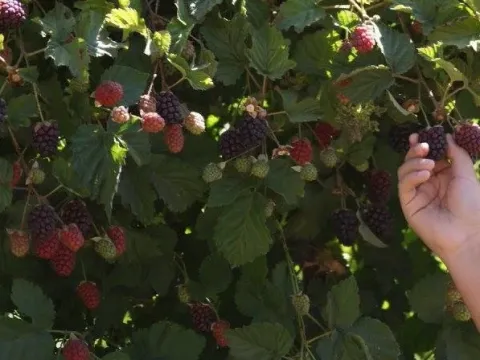
Olallie is a high-yielding blackberry hybrid belonging to the Rosaceae family, developed through breeding programs in Oregon, USA. This cultivar is a complex interspecific hybrid that combines the traits of the Loganberry, Youngberry, and wild blackberry. The plant produces vigorous semi-trailing canes that require trellising to support growth and facilitate easier harvest management.
What the section contains
Olallie
For successful production, Olallie requires well-drained, fertile loam soils with a pH ranging between 5.5 and 6.5. The root system is susceptible to waterlogging, making raised beds or sites with excellent natural drainage highly recommended. The plants thrive in sunny locations sheltered from strong winds, which can damage the long fruiting canes.
Climatic requirements involve a temperate climate with consistent rainfall during the growing season. The variety has moderate cold hardiness, so in regions with harsh winters, canes must be removed from the trellis and covered with protective materials. Optimal temperatures for blooming and fruit set are between 18 and 25 degrees Celsius.
Cultivation practices include the implementation of drip irrigation, particularly during the fruit development phase. Pruning is a critical maintenance task involving the removal of spent second-year canes immediately after the harvest and the thinning of new primocanes. Applying mulch around the root zone helps preserve soil moisture and suppresses weed competition.
The economic value of Olallie is high due to its distinct flavor, sweet profile, and high juice content. The berries are primarily used for processing into jams, syrups, wines, and industrial freezing, though they also hold value as fresh market berries. It is a favored choice for niche growers focusing on high-quality berry production.
Olallie is susceptible to several fungal pathogens, with anthracnose and botrytis (gray mold) being the most prevalent. Prevention strategies involve ensuring proper spacing between plants to promote airflow and conducting regular sanitary pruning. If infection levels exceed thresholds, approved fungicides should be applied according to regional guidelines.
Common pests include the strawberry bud weevil and various shoot moths that can impact productivity. Integrated pest management (IPM) is recommended, focusing on early-season monitoring and the use of biological control agents where possible. Growers should also remain vigilant for aphids, which are known vectors for various viral diseases.
The harvest season for Olallie typically occurs in mid-summer, lasting approximately 3 to 5 weeks depending on environmental conditions. Since fruit maturation is asynchronous, multiple harvests are required every 2 to 3 days. Berries should be picked during dry weather once they reach full black maturity and release easily from the receptacle.