
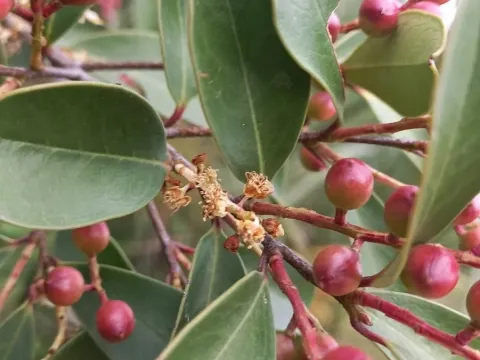
Brazilian cherry
Prunus brasiliensis
The Brazilian cherry, scientifically classified as Prunus brasiliensis, belongs to the Rosaceae family. It is a distinctive evergreen tree native to the mountainous forests of South America, known for its dense foliage and high-quality wood.
What the section contains
Brazilian cherry
This crop thrives in tropical and subtropical climates. It is sensitive to severe frost, which limits its commercial cultivation to specific regions where winters are mild and temperatures remain above freezing.
Regarding soil requirements, the tree performs best in deep, well-draining, and fertile loamy soils. It cannot tolerate waterlogged conditions, making efficient irrigation and site drainage essential.
Cultivation practices include providing adequate space for root expansion, as the tree develops a wide and deep root system that anchors it against adverse weather conditions.
Regular maintenance involves light pruning to ensure proper sunlight penetration into the canopy, which is necessary for both tree health and the uniform ripening of the fruits.
Like many fruit-bearing species in the Rosaceae family, the Brazilian cherry is susceptible to various fungal pathogens that affect leaves and fruit development during humid seasons.
Insect pests, including aphids and fruit-piercing moths, pose a recurring challenge for orchard managers, requiring integrated pest management strategies to protect the crop.
Sanitation in the orchard is critical; removing fallen leaves and decaying fruit prevents the buildup of inoculums that can cause widespread outbreaks of fungal diseases.
The use of balanced fertilization protocols helps maintain tree vigor, making the specimens more resistant to minor pest attacks and environmental stresses.
Continuous monitoring of the tree bark and branch health is recommended to identify signs of wood-boring insects early, preventing severe damage to the structural integrity of the tree.